
Microsoft has released a DirectX Raytracing (DXR) preview that lets game engines reuse small groups of triangles and update changed regions of a scene’s ray tracing data. The features arrived on 28 October 2026 in Agility SDK 1.722-preview.
The widely reported 90% memory reduction comes from one Microsoft demonstration. It measures acceleration structures, the data used to find what a ray hits. It does not describe a game’s complete VRAM use, and Microsoft warns against expecting comparable gains in shipping games.
What the Radeon RX 9070 demonstration measures
Microsoft’s current table compares traditional acceleration-structure rebuilds with clustered geometry on a Radeon RX 9070. These are the publisher’s sample results; GTR has not run the benchmark.
| Sample measurement | Traditional rebuild | Clustered geometry |
|---|---|---|
| Acceleration-structure memory | 7,519 MiB | 774 MiB |
| GPU acceleration-structure preparation/build per frame | 788 ms | 3.11 ms |
| Static build scratch memory | 1.83 MiB | 526 MiB |
The first row is an 89.7% reduction. The last row shows a separate cost: building the structures needs more temporary workspace. That workspace, textures, render targets and other allocations still matter when judging whether a workload fits a graphics card.
The demonstration gives each animated copy its own acceleration structure, even when the copies deform in the same way. A game engine can share one traditional structure among those identical copies. The sample also offers a refit option, which updates an existing structure instead of rebuilding it. Microsoft’s reported comparison uses the rebuild path.
Which GPUs support the preview?
Microsoft lists the following hardware for the clustered-geometry and Partitioned Top-Level Acceleration Structures (PTLAS) preview. Support for other features in the same SDK release can differ.
| GPU family | Support and availability |
|---|---|
| NVIDIA RTX | All RTX GPUs; use a supporting NVIDIA driver |
| AMD Radeon RX 9000 | Agility SDK Developer Preview driver |
| Intel Arc B-Series; Core Ultra 200V and Series 3 | Intel Graphics Beta Preview Feature Driver |
| Qualcomm Snapdragon X2 | Driver support targeted for Q1/Q2 2027 |
The broader 1.620 retail release lists Radeon RX 7000 support for several other features. That does not establish RX 7000 support for these DXR preview features. Older ray tracing hardware still depends on vendor implementation and validation.
Developers need matching preview headers and runtime, Shader Model 6.10 tooling, a supporting driver and Windows Developer Mode. This is an experimental integration path, not a setting that players can enable to upgrade every installed game.
Clusters and partitions solve different update problems
Clustered geometry lets a renderer assemble object-level structures from smaller reusable pieces. Partitioned TLAS works at scene level, retaining unchanged regions while updating others. The features can be used independently or together; games must integrate them to benefit.
This also differs from Advanced Shader Delivery, which delivers compiled shaders to reduce compilation work on the player’s PC. The DXR preview changes how engines manage ray tracing geometry.
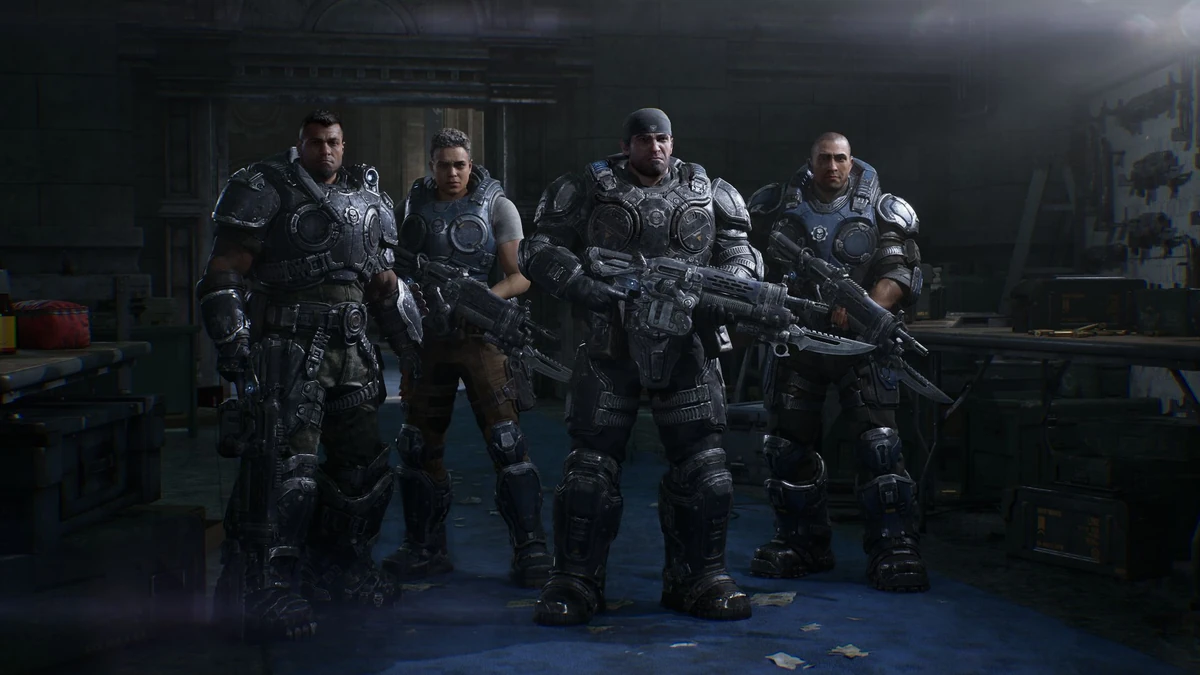
Microsoft cites Gears of War: E-Day as an example of NVIDIA’s existing vendor-specific RTX Mega Geometry approach. The new DirectX path provides a common API across supporting vendors. That relationship does not make Microsoft’s demonstration a benchmark of Gears.
Shader Model 6.10 is planned for the 1.621 retail SDK in early December. That compiler milestone does not itself confirm when these DXR features will leave preview or which future games will adopt them.
Sources: Microsoft DXR preview and sample results; Microsoft Agility SDK release and hardware support; Microsoft sample documentation.