
Microsoft is widening Advanced Shader Delivery beyond AMD hardware. Support is now available on Snapdragon X2 systems, while all NVIDIA RTX GPUs and RTX Spark, along with selected Intel Arc and Core Ultra graphics, are scheduled to join later in October.
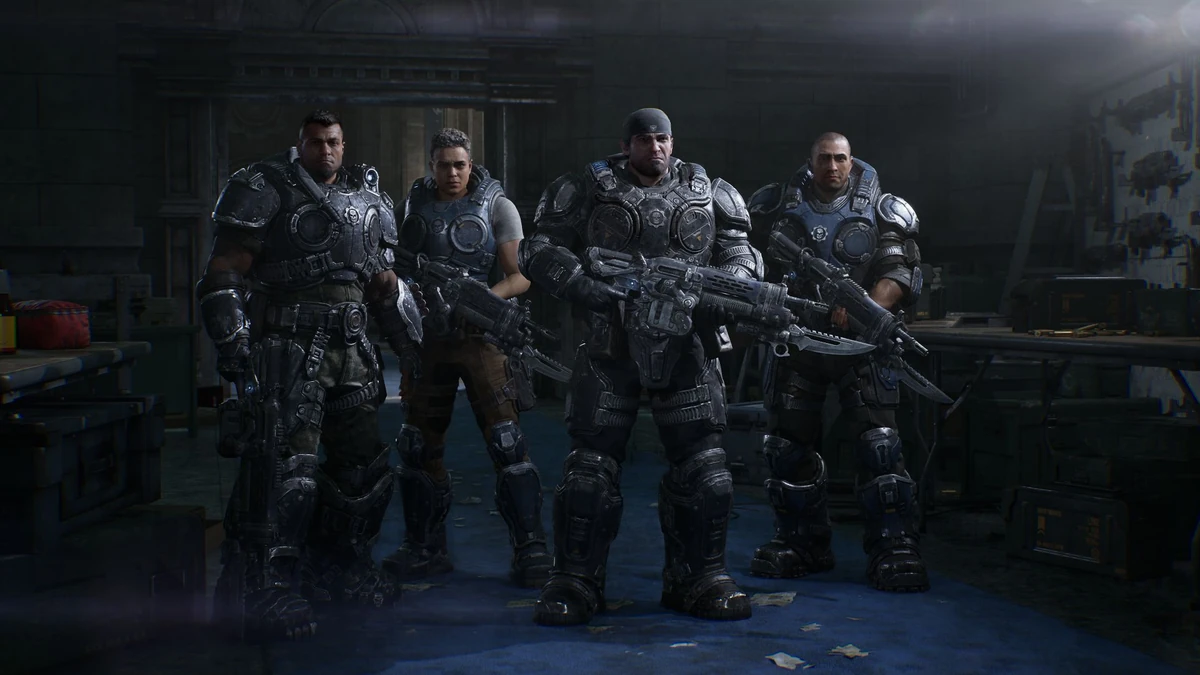
Gears of War: E-Day is the first game Microsoft has named for the expanded Windows device ecosystem. The company says Advanced Shader Delivery cuts the game’s shader compilation time at first launch by approximately 95%, reducing a wait of several minutes on a typical PC to a few seconds.
The percentage needs a precise boundary: Microsoft is measuring shader compilation time, not claiming that E-Day as a whole loads 95% faster or runs 95% faster.
Advanced Shader Delivery changes where that compilation work happens. Instead of requiring every gaming PC to build a large shader cache locally at launch — or compile missing shaders during gameplay — the system prepares shader data ahead of time and delivers it with the game.
Advanced Shader Delivery moves compilation out of the first launch
Direct3D 12 games can use large numbers of shaders and pipeline states. Those eventually need a compiled representation appropriate for the graphics hardware and driver running the game.
One option is to compile them locally before play begins. That produces the shader-preparation screens that can keep players waiting for minutes after a new installation or driver update.
The other problem appears when a required shader is compiled only when the game encounters it. That work can interrupt a frame and contribute to the short, sharp frame-time spikes commonly described as shader compilation stutter.
Microsoft’s system starts with a State Object Database, or SODB, containing graphics states required by the game. Those inputs are used to prepare a Precompiled Shader Database for a compatible graphics environment, allowing the resulting shader data to arrive through the game-delivery pipeline rather than being rebuilt entirely on the player’s machine.
Microsoft’s documentation also accounts for graphics-driver changes, which matter because compiled shader data is tied to the hardware and driver environment.
ASD therefore serves a different purpose from DLSS, FSR, XeSS or frame generation. Those technologies change how frames are rendered or reconstructed. Advanced Shader Delivery targets work that can happen before a shader is ready to participate in rendering at all.
Gears of War: E-Day cuts first-launch shader compilation by about 95%
Microsoft says Gears of War: E-Day takes only a few seconds to complete its first-launch shader compilation with ASD, compared with several minutes on a typical PC without it. A successful installation displays “Precompiled shaders installed” in the game’s launch window.
The current requirements are more specific than simply having Windows 11. Microsoft lists Windows 11 24H2 or newer, supported graphics hardware and an appropriate driver.
AMD support covers RDNA, RDNA 2, RDNA 3, RDNA 3.5 and RDNA 4 hardware with Adrenalin 26.6.1 or newer. Qualcomm support currently lists Snapdragon X2 Series graphics with driver 2026.08.3 or newer.
Later in October, Microsoft plans to add all NVIDIA RTX GPUs and RTX Spark. Intel’s first listed hardware is narrower: Arc B570 and B580, plus Core Ultra Series 2 and Series 3 graphics.
Hardware support alone is not enough. Microsoft’s developer documentation also requires the game and delivery pipeline to supply the appropriate shader databases. For E-Day, Microsoft specifically tells players to install the Xbox PC app before downloading the game.
That is the currently documented delivery path for E-Day; it should not be treated as confirmation that the same precompiled shader package is already available through every PC storefront.
Tom’s Hardware found large gains — and one clear limit
Independent testing published by Tom’s Hardware during the AMD rollout gives a useful check on Microsoft’s claims.
Using a Radeon RX 9070 XT, the publication measured Forza Horizon 6 dropping from 48 seconds to two seconds during its initial preparation, a 96% reduction. The Outer Worlds 2 fell from 2 minutes 52 seconds to nine seconds, or about 95%.
The gameplay result depended on the title. A severe first-run compilation hitch in Forza Horizon 6 disappeared with ASD enabled.
Silent Hill f was the counterexample. The game has no long pre-compilation screen, but Tom’s Hardware observed substantial shader-related stutters during early gameplay. Those stutters remained with ASD active.
The test could not establish whether that came from an API limitation or incomplete shader coverage in the game’s SODB. Either way, it shows the boundary of the technology: precompiled shader delivery can avoid compilation stalls only for shader states that have been captured and supplied correctly.
It also cannot fix unrelated causes of uneven frame times. Asset streaming, CPU work, storage activity, drivers and game-engine behavior can produce similar-looking hitches.
That distinction also matters when reading DirectX 12 performance telemetry. PresentMon 2.6 can record PSO compilation activity alongside frame captures, but a compilation event appearing near a frame-time spike is evidence to investigate rather than proof that shader compilation caused every part of the hitch.
NVIDIA and Intel turn ASD into a broader Windows pipeline
The October expansion takes Advanced Shader Delivery beyond an AMD-centered rollout. Snapdragon X2 is now part of Microsoft’s supported hardware list, while NVIDIA and Intel bring additional discrete and integrated Windows graphics into the same delivery model later this month.
A compatible RTX, Radeon, Arc or Snapdragon GPU does not automatically give every Direct3D 12 game a precompiled shader package. Developers need the required shader states, drivers need the relevant compiler support, and the game has to reach players through a storefront that participates in the delivery process.
Microsoft has already named Call of Duty: Modern Warfare 4 as another upcoming ASD title, with additional games planned.
If adoption grows, the practical change is straightforward: less shader compilation needs to happen after the player presses Play. For PC games that currently spend minutes building caches — or compile missing states at the worst possible moment during gameplay — moving that work into the delivery pipeline is the part of Advanced Shader Delivery worth watching.
Sources: Microsoft DirectX Developer Blog; Microsoft Learn — Advanced Shader Delivery; Tom’s Hardware — independent RX 9070 XT testing. Analysis: GameTechReport.