
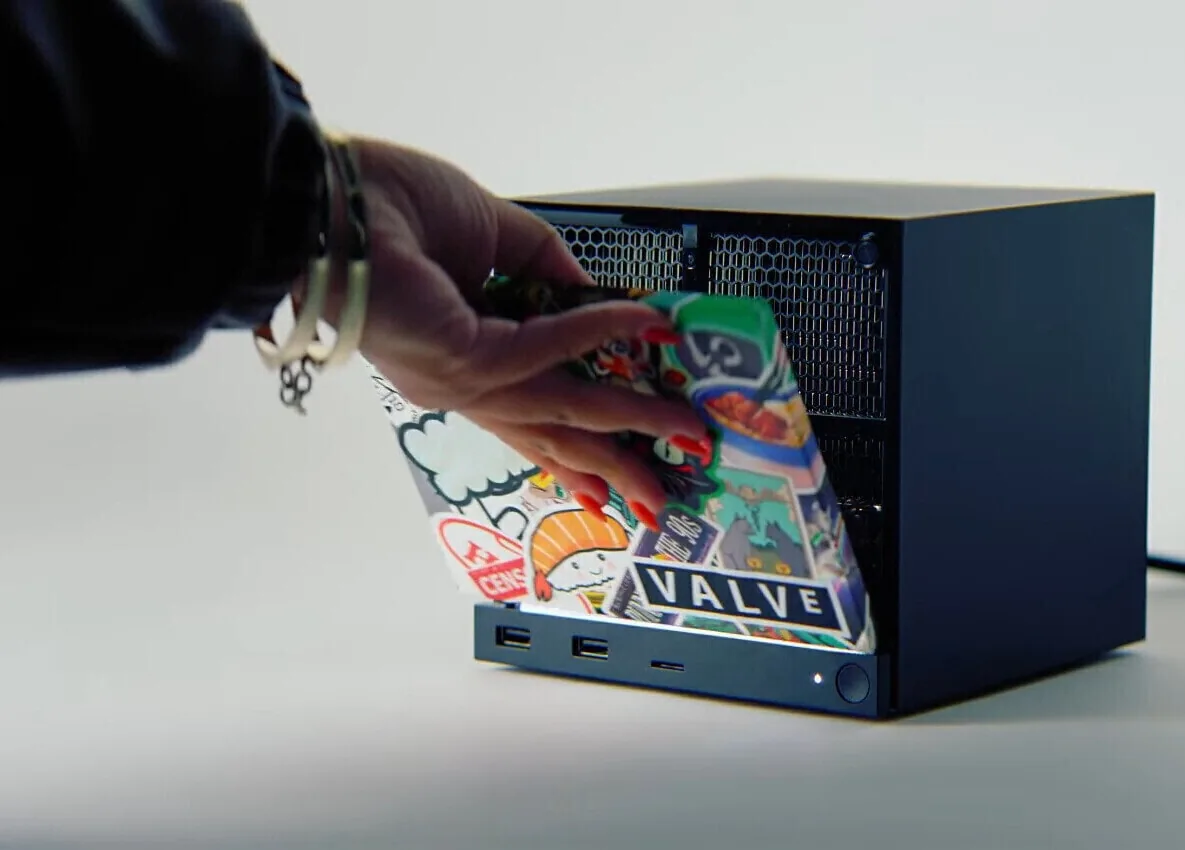
Valve has confirmed that its work with AMD to bring full HDMI 2.1 support to SteamOS is now complete, removing a long-running software limitation that affected high-end HDMI output on Linux-based gaming PCs. The change matters most for the Steam Machine, where Valve says the current software stack already supports HDMI 2.1 variable refresh rate, and it also opens the door to 4K 240 Hz output with DSC over HDMI in a future update.
The update is important because the hardware side was never the main problem. Valve’s public spec sheet still lists the Steam Machine with HDMI 2.0, but the company says the system can handle HDMI 2.1 features once the software stack is in place. In other words, the bottleneck was SteamOS and the Linux graphics stack, not the box itself.
Steam Machine’s HDMI 2.1 limit was a software stack problem, not a hardware one
Valve engineer Pierre-Loup Griffais said the company’s work with AMD to implement HDMI 2.1 with FRL support has been completed. FRL, or Fixed Rate Link, is part of the HDMI 2.1 feature set needed for higher-bandwidth output. That is the key step that makes full-featured, high-framerate 4K over HDMI possible on the Steam Machine.
For PC gamers using modern TVs or high-refresh monitors over HDMI, this is the kind of change that affects real-world setup choices. Until now, HDMI 2.1 support on Linux was blocked in part by licensing restrictions and the state of the open-source graphics stack. Valve says that has now been resolved through work with AMD and other partners.
Valve also says the current Steam Machine software stack already has HDMI 2.1 VRR enabled, including support for both AMD FreeSync displays and HDMI Forum VRR displays. That matters for TV users as much as monitor users, since HDMI Forum VRR is the standard many modern televisions rely on.
4K 240 Hz over HDMI is coming to SteamOS with DSC
Alongside FRL support, Valve says a future update will add support for 4K 240 Hz with DSC over HDMI. DSC, or Display Stream Compression, is used to carry very high-resolution, high-refresh output over a connection that would otherwise run out of bandwidth.
That does not mean every Steam Machine owner will immediately be running games at 4K and 240 frames per second. It does mean the platform will be able to expose the display modes needed by high-end TVs and monitors once the update lands. For players building a living-room SteamOS setup, the practical benefit is fewer output compromises when connecting to a premium display.
Valve has also tied this work to future FSR 4 improvements, describing HDMI 2.1 VRR as one part of the performance puzzle. The company did not provide a release date for the update, so users should treat the feature as confirmed work in progress rather than a shipping change.
Steam Deck still lacks full HDMI 2.1 support for now
Valve said full HDMI 2.1 support has not yet been implemented for the Steam Deck, even though it will be added in a future update. That means Deck owners should not assume the same HDMI 2.1 feature set is available today just because the Steam Machine work is finished.
The distinction matters because the Steam Deck and Steam Machine share parts of the SteamOS ecosystem, but they are not identical devices. Valve’s statement suggests the underlying Linux and AMD driver work can be carried across, but the rollout is still device-specific.
For Steam Deck users who dock to external displays, the current practical takeaway is simple: check the actual output modes supported by your dock, display, and current SteamOS build. Valve has already enabled important pieces such as VRR in the current driver setup, but full HDMI 2.1 support is still pending on the handheld.
SteamOS gains a broader win beyond the Steam Machine
Even if the Steam Machine remains a niche product, the work behind it has wider value for Linux gaming. Valve says the HDMI 2.1 progress has helped improve the gameplay experience on Linux generally, because the changes landed in the open-source stack rather than being locked to one device.
That is the part PC gamers should keep an eye on. When a platform-level limitation like HDMI 2.1 support gets cleared in SteamOS, the benefit can extend to other AMD-based Linux gaming systems that depend on the same driver path. It also reduces one of the remaining reasons some users have preferred Windows for living-room or high-refresh TV gaming.
Valve’s latest comments do not change the fact that the Steam Machine’s public spec page still lists HDMI 2.0, and they do not turn every connected display into a 4K 240 Hz endpoint overnight. But they do confirm that the software barrier is gone, the VRR groundwork is already in place, and the next SteamOS update could finally make the platform’s HDMI output match the hardware’s potential.
Valve’s broader compatibility work is already reaching beyond the Steam Machine. SteamOS 3.9.1 and Steam Frame show the two sides of that expansion: SteamOS is addressing third-party handhelds, external displays and discrete Radeon GPUs, while Steam Frame pushes Valve’s compatibility stack onto Arm64 hardware.
Source: Valve / Steam; additional reporting: TechPowerUp