
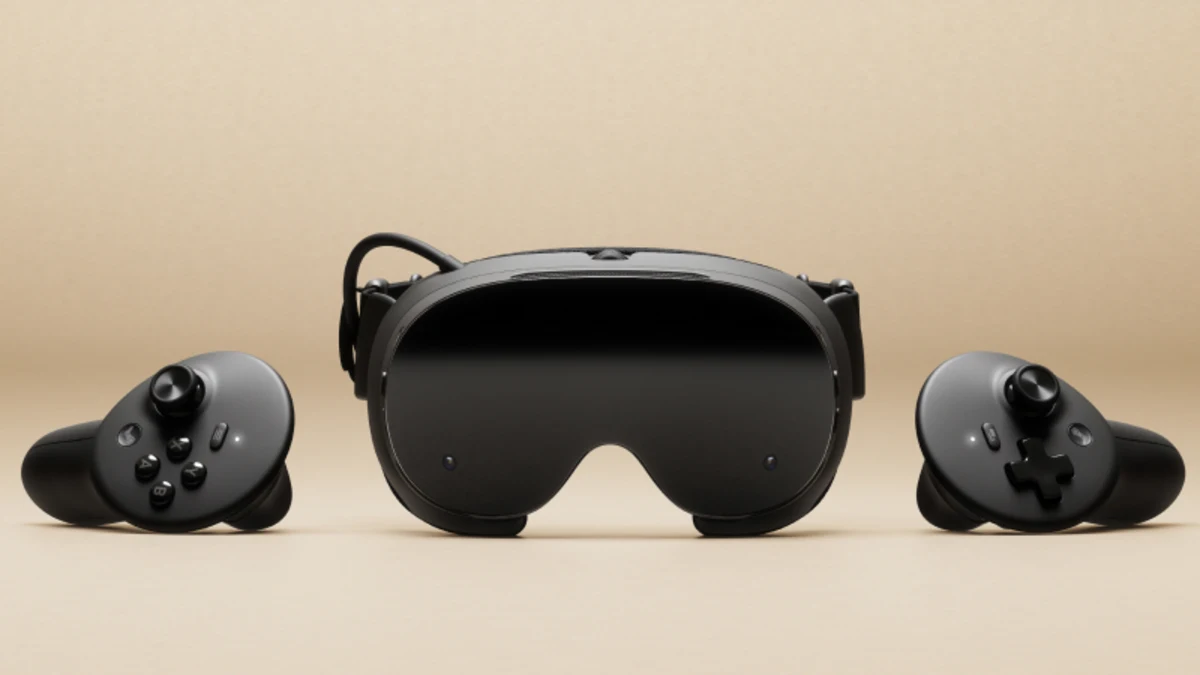
Steam Frame’s $1,059 starting price is the obvious launch headline, but Valve’s more consequential move is happening underneath the hardware. The headset runs SteamOS on an Arm64 Snapdragon 8 Gen 3 while most of the PC library it inherits was built for x86. At the same time, SteamOS 3.9.1 is fixing compatibility problems on handhelds, displays and GPUs Valve does not manufacture.
The two releases are technically distinct. SteamOS 3.9.1 is a Preview update in Valve’s SteamOS 3.9 branch, while Steam Frame has its own Arm-focused execution stack. Both releases push more compatibility work into Valve’s software stack. SteamOS has to cope with more PC hardware, while Proton and FEX have to carry an x86 library onto Arm64.
SteamOS 3.9.1 fixes problems on hardware Valve does not build
Valve’s SteamOS 3.9.1 Preview notes include three fixes that reach well beyond Steam Deck. The update addresses a system crash when Forza Horizon 6 launches on Lenovo’s Legion Go 2, lower-than-intended FPS when frame limits are used on certain external displays, and suspend/resume failures on systems with RDNA1 or RDNA2 dedicated GPUs.
There is a Deck-specific fan-control fix in the same build, but the third-party cases are more revealing. Steam Deck gave Valve one known AMD platform to support. Legion Go 2, discrete Radeon GPUs and external displays add variables Valve does not control. SteamOS 3.9.1 shows support expanding with those variables.
That follows work already visible in earlier releases. SteamOS 3.8.14 targeted Wi-Fi slowdowns and handheld-PC behavior, while other updates have widened display support. GTR covered those changes in SteamOS 3.8.14’s handheld fixes.
SteamOS 3.9 is laying groundwork for more PC configurations
The 3.9.1 fixes sit on top of a broader SteamOS 3.9 refresh. Valve moved the branch to an updated Arch Linux base, upgraded Desktop Mode from Plasma 6.4.3 to 6.7.3 and rebased the kernel on Linux 7.2. The bootloader has also been updated for broader motherboard compatibility.
New installations now default to wpa_supplicant for Wi-Fi, with fast reconnect behavior after resume. Existing installations stay on iwd unless the setting is changed manually. The branch also adds preliminary hibernation and improves SteamOS as a virtual-machine guest through accelerated graphics support with virtio-gpu and Venus.
None of those changes is as marketable as a new device, but they are the kind of work an operating system needs once it has to handle more motherboards, network stacks, sleep states and graphics configurations. Valve’s HDMI 2.1 work for Steam Machine-class systems points in the same direction.
Steam Frame adds x86-to-Arm translation to the stack
Steam Frame pushes the compatibility problem further because Valve is changing CPU architecture. The headset uses a Snapdragon 8 Gen 3 Arm64 chip, while most existing Windows PC games on Steam were compiled for x86.
Windows games can still use Proton for the Windows-to-Linux layer, while FEX translates x86 instructions to Arm64. Valve says FEX forwards graphics calls to native host libraries such as OpenGL and Vulkan where possible and uses code caching to reduce in-game stutter. Android software has a separate route through Lepton, and developers can also ship native Arm64 builds.
Valve’s guidance is unusually direct: for many developers, the existing Windows x86 build running through Proton and FEX will make more sense than maintaining a Steam Frame-specific port. Developers that already have an optimized Android Arm64 version may prefer that path instead.
| Workload | Steam Frame path | What Valve is solving |
|---|---|---|
| Windows x86 game | Proton + FEX | Windows APIs plus x86-to-Arm64 translation |
| Android Arm64 game | Lepton | Android compatibility inside SteamOS |
| Native Arm64 build | Runs natively on SteamOS | Avoids x86 translation when a native build exists |
| PC-rendered VR or 2D game | Steam streaming | The host PC renders; Frame receives the stream |
Half-Life: Alyx provides a useful first-party example of the native route. Valve updated the game for Steam Frame, ported it to ARM64/aarch64 and added foveated rendering and depth reprojection for standalone play. That does not make native Arm64 the expected path for every developer, but it shows Valve using both translation and native optimization where each makes sense.
Steam Deck used Proton to avoid waiting for thousands of native Linux ports. Steam Frame adds another translation step: FEX bridges x86 code to Arm64 while Proton continues handling Windows compatibility. Valve is again trying to keep the existing Steam library intact rather than ask developers to rebuild it.
GTR has already seen the value of that approach in Valve’s Proton Hotfix work for Marvel Rivals, where a compatibility problem could be addressed in the platform layer instead of waiting for a native Linux release.
Valve puts SteamOS PCs and Steam Frame in the same hardware plan
The strongest evidence for reading these releases together comes from Valve’s own 2026 Steam Hardware presentation.
One slide is titled “SteamOS Compatible” and lists verification testing, Legion Go S, Legion Go 2 and other devices people are testing and building themselves. Later, the Steam Frame section says Valve is expanding Proton for Arm64 so x86 games can run on Frame’s Arm chip, with the translation intended to stay invisible to developers and customers.
Valve’s own framing: the deck closes by describing this work as “future-proofing for future SteamOS devices.”
The slide deck does not announce a generic Arm desktop edition of SteamOS, and it does not say SteamOS 3.9.1 is the Frame build. It does show Valve discussing third-party SteamOS PCs, its own hardware and Arm compatibility as parts of one longer-term platform plan.
Steam Frame’s $1,059 price raises the stakes for local compatibility
Steam Frame starts at $1,059 for the 256GB model, with the 1TB version priced at $1,299. At that level, the headset has to offer more than wireless PC VR. Valve is also asking buyers to value standalone access to the same Steam library through Proton, FEX, Lepton and native Arm64 software.
Frame’s case is not that its Snapdragon chip replaces a gaming PC. Demanding or incompatible games can still be streamed from a PC, Windows x86 titles can use Proton and FEX when they work locally, Android software has the Lepton route, and native Arm64 builds can avoid x86 translation entirely.
That makes compatibility work central to the value of the device. Every improvement to Proton, FEX or native Arm support increases the number of games that can move from “stream it from the PC” to “run it on the headset” without changing the player’s Steam library.
Valve is making the Steam library less dependent on one device
Steam Deck proved Valve could make Linux gaming practical around one known hardware target. SteamOS 3.9.1 shows the company taking on problems from systems it does not build; Steam Frame adds an Arm64 processor underneath a library still dominated by x86 software.
Drivers, firmware, anti-cheat, game-specific bugs and translation overhead do not disappear. Valve cannot eliminate those differences, but it can solve more of them once in SteamOS and its compatibility layers instead of leaving each game or device to handle them separately.
That makes the SteamOS 3.9.1 changelog more than routine maintenance. Alongside Steam Frame, it shows how far Valve’s software ambitions have moved beyond the original Steam Deck — from supporting one handheld well to keeping the same Steam library useful across increasingly different hardware.
Sources: Valve — GDC 2026 Steam Hardware Talk; Valve — SteamOS 3.9.1 Preview; Valve — Steam Frame compatibility documentation; Valve — Half-Life: Alyx Steam Frame update; Valve — Steam Frame product page.