
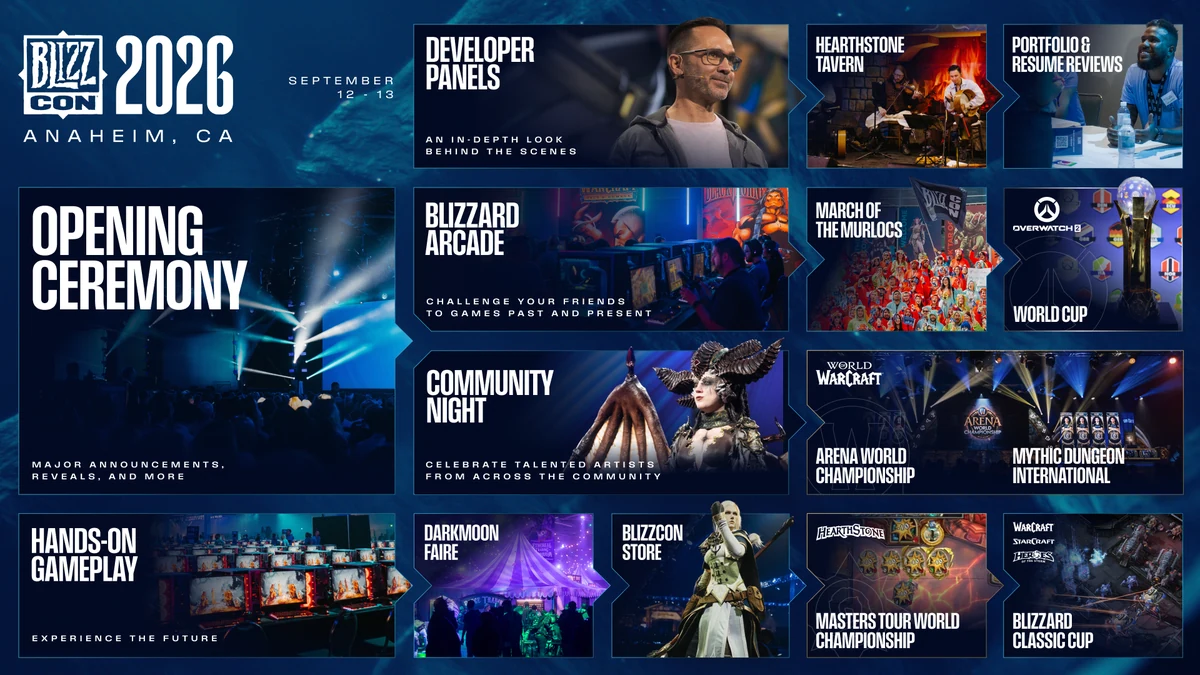
Blizzard used BlizzCon 2026 to put the rest of the decade on the table. Diablo V is targeting Spring 2029. StarCraft is returning as an open-world shooter in Spring 2030. World of Warcraft: Forever launches this November, while Warcraft III has received its first new story campaign in more than two decades.
Three announcements defined Blizzard’s longer-term roadmap: a numbered Diablo sequel built around a defeated Sanctuary, StarCraft returning in a radically different form, and a permanent branch of World of Warcraft that develops original Azeroth instead of simply replaying it.
BlizzCon 2026 — the big three
- Diablo V — Spring 2029: Sanctuary has fallen and Diablo has already won.
- STARCRAFT — Spring 2030: Blizzard revives the universe as an open-world shooter.
- World of Warcraft: Forever — 4 November 2026: original Azeroth becomes a permanent new development branch.
The rest of Blizzard’s portfolio moved too. Diablo IV has another season, a Nintendo Switch 2 release and a new class ahead of it. Modern World of Warcraft continues toward The Last Titan. Overwatch is changing long-established heroes, Hearthstone is adding Monk, and even Heroes of the Storm has new playable content again.
BlizzCon 2026 was effectively a roadmap, not just a set of trailers. Blizzard is trying to support the games people already play, reopen parts of its catalogue that had gone quiet, and build major projects that will not arrive for another three or four years.
Diablo V starts after Sanctuary has already fallen
Diablo V is targeting Spring 2029, and Blizzard is beginning the sequel after the heroes have already failed.
Sanctuary has fallen. Diablo has won. Players are not entering another story built around stopping the Lord of Terror before he conquers the world; they enter a world where that conquest has already happened.
Starting from a defeated Sanctuary gives Blizzard room to change both the fiction and the player’s role in the world. The dedicated Diablo V: Forging the Next Era presentation described a damaged Sanctuary in which traditional safe settlements are no longer assumed to be waiting across the map. The player becomes the Heir to Westmarch and travels with a growing caravan of survivors gathered during the campaign.
Three classes have been presented so far. Demon Hunter and Monk return from earlier Diablo games, while the Plague Knight is new to the series. The new class is built around spreading disease and pestilence and then using those effects as part of its combat loop.
Blizzard is also looking backward while designing the sequel. Early development discussions have included more procedural generation in dungeons and parts of the world, deeper itemization and ideas associated with Diablo II. None of those unfinished systems should be treated as a locked launch specification three years ahead of release, but they show the direction Blizzard is exploring.
A conquered Sanctuary also gives those systems a narrative purpose. A Sanctuary that has already been conquered gives the developers a reason to rethink towns, travel and how the player builds a support network. The caravan is not simply a different menu screen if the surrounding world is no longer expected to provide safety.
The setup gives Diablo V a clearer identity than simply beginning another cycle of evil returning to Sanctuary.
Diablo IV becomes the bridge to 2029
Diablo V’s announcement did not come with a plan to wind Diablo IV down immediately.
Season of Hell’s Legacy begins on 15 September as part of Diablo’s 30th anniversary. Blizzard is bringing Diablo, Mephisto and Baal back into the current game alongside Deckard Cain, anniversary rewards and equipment that deliberately pulls from the history of the franchise.
Diablo IV also reaches Nintendo Switch 2 on the same day. The move gives the current game another platform more than three years before Diablo V’s target window.
The next major class addition arrives later. Blizzard has confirmed the Amazon for the first half of 2027 as a standalone class pack. Its Diablo IV interpretation brings bows and javelins together with four broad archetypes: Champion, Skirmisher, Ranger and Commander.
The handoff between Diablo IV and Diablo V is deliberately long rather than abrupt. Diablo IV can continue through seasons and class additions while Blizzard develops the next numbered game behind it.
The franchise is expanding outside games at the same time. Blizzard confirmed that an animated Diablo series is in development with Netflix, although it has not announced a release date, cast or enough production detail to judge the project yet.
Blizzard now has three Diablo tracks running in parallel: Diablo IV, the Netflix adaptation and Diablo V.
StarCraft returns as an open-world shooter in 2030
StarCraft is finally getting another major Blizzard game, but the project announced at BlizzCon is not another RTS sequel.
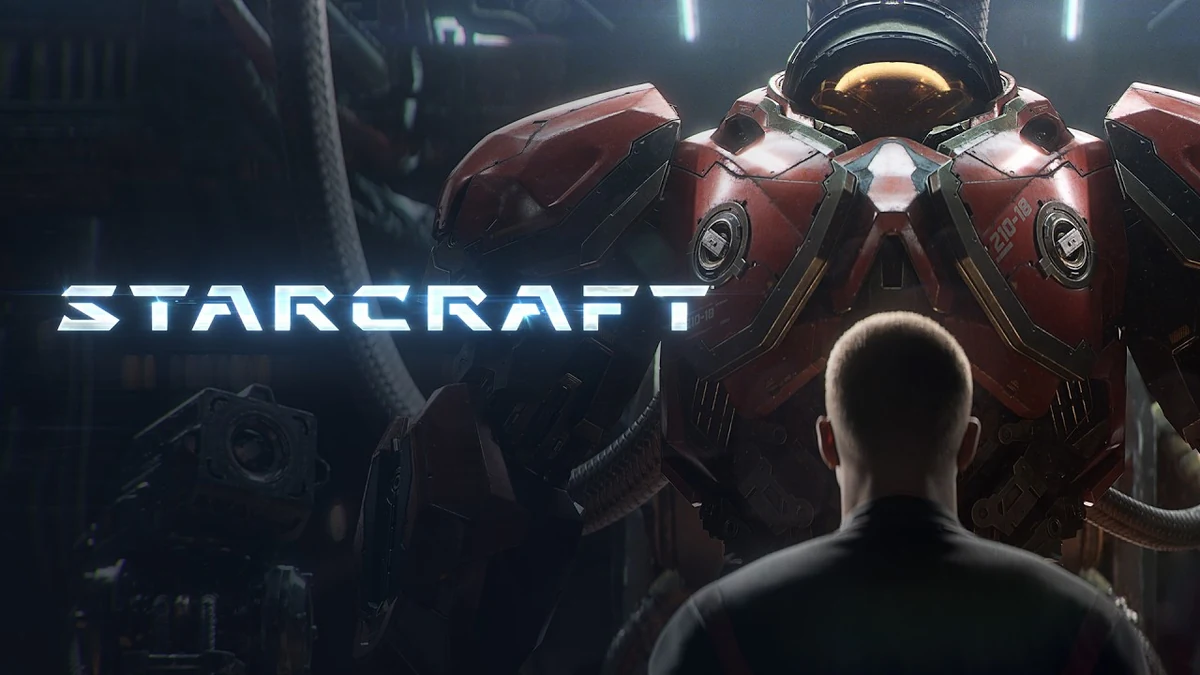
Simply titled STARCRAFT, the new game is an original open-world shooter targeting Spring 2030. Blizzard used the Dominion cinematic to reveal the return to the Koprulu Sector, but it did not show a detailed gameplay demonstration.
Blizzard has revealed the StarCraft direction, not the full game
- An original open-world shooter set in the Koprulu Sector.
- Targeting Spring 2030.
- Blizzard has not detailed multiplayer, progression systems or the wider gameplay structure.
StarCraft has been inseparable from real-time strategy since 1998. Blizzard could have used the franchise’s return to recreate that structure with modern production values and a new competitive ladder. Instead, its first newly announced major StarCraft project in years puts the player on the ground inside the universe.
The idea also has history. Blizzard spent years developing StarCraft: Ghost before cancelling it, so an action game in this universe is not a new ambition. The 2030 project is not being presented as a resurrection of Ghost, but Blizzard is once again trying to answer the same broader question: what does the Koprulu Sector look like when the player experiences it directly rather than commanding armies from above?
With a 2030 target, many of those details can still change. The cinematic establishes intent, not a final design document.
Blizzard has put StarCraft back into active AAA development and has chosen a new genre instead of relying on an obvious StarCraft III announcement to carry the reveal.
For a franchise that had spent years largely represented by StarCraft II, remastered releases and competitive legacy, that is a major shift even before the first real gameplay presentation.
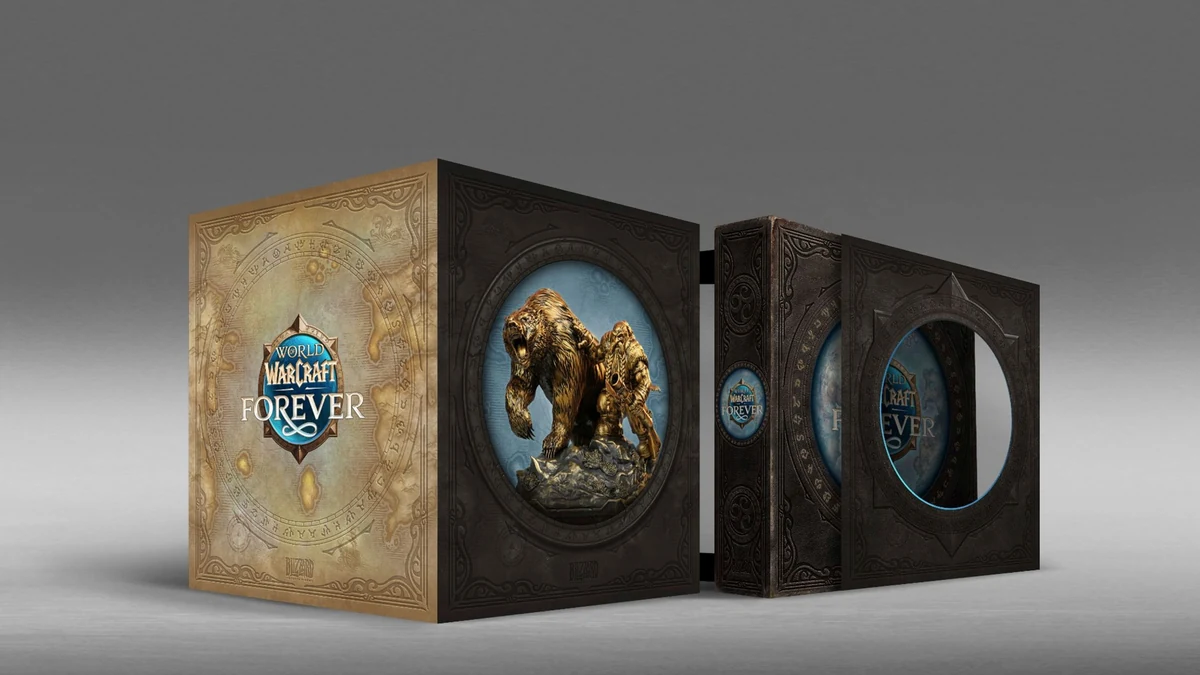
WoW Forever turns the Classic+ idea into a permanent branch of Azeroth
World of Warcraft: Forever launches globally on 4 November, with beta access beginning on 17 September for players with qualifying pre-purchase access.
The project is Blizzard’s answer to an idea players have discussed for years under the informal name “Classic+”: use the foundations of original World of Warcraft, but create new content instead of simply replaying the same expansion history.
Forever is being positioned as a permanent World of Warcraft home alongside modern WoW and WoW Classic rather than as another temporary season.
Its place in the timeline is deliberate. Blizzard situates Forever after the events of Warcraft III Reforged: Forsaken Kingdom and before Molten Core. Players return to the original continents and the level 1–60 journey, but that world can now develop into stories the 2004 game never received.
The announced launch scope is much larger than a fresh Classic realm. Blizzard is adding new questing, dungeons, raids, regions and the Skyborne playable race rather than simply restarting the 2004 content cycle.
Forever keeps level 60 but adds new Azeroth content
- Level 1–60 progression remains central.
- More than 1,000 new quests.
- Nine new dungeons and two new raids.
- New and expanded regions plus the Skyborne playable race.
- No flying mounts and no level scaling.
Blizzard’s deep dive framed Forever around familiarity, the importance of the world itself, the value of the journey and the social friction that helped define early WoW. The developers said there will be no flying mounts and no level scaling. Leveling is meant to remain part of the game rather than a corridor players rush through on the way to endgame.
Adding years of new development to original Azeroth will naturally introduce modern production techniques and new systems. Forever only keeps its reason to exist if those additions do not gradually reproduce the assumptions of modern World of Warcraft inside an older map.
Forever expands the old world instead of replacing it
The announced new areas include locations such as Mount Hyjal, Riverglades and Zephras Isle, while Blizzard is also using unfinished or lightly explored corners of old Azeroth as space for new adventures.
The Skyborne provide one of the more unusual additions. Blizzard is tying parts of the race’s identity to faction choice, with different class possibilities depending on whether a character joins the Horde or Alliance.
Endgame content follows the same philosophy of adding to the original framework rather than raising the level cap and immediately abandoning the older world.
Forever sits between Blizzard’s two existing WoW paths. Classic preserves and replays known eras. Modern WoW continues expanding the current timeline. Forever gives Blizzard a place to ask what original Azeroth might have become if development had continued in another direction.
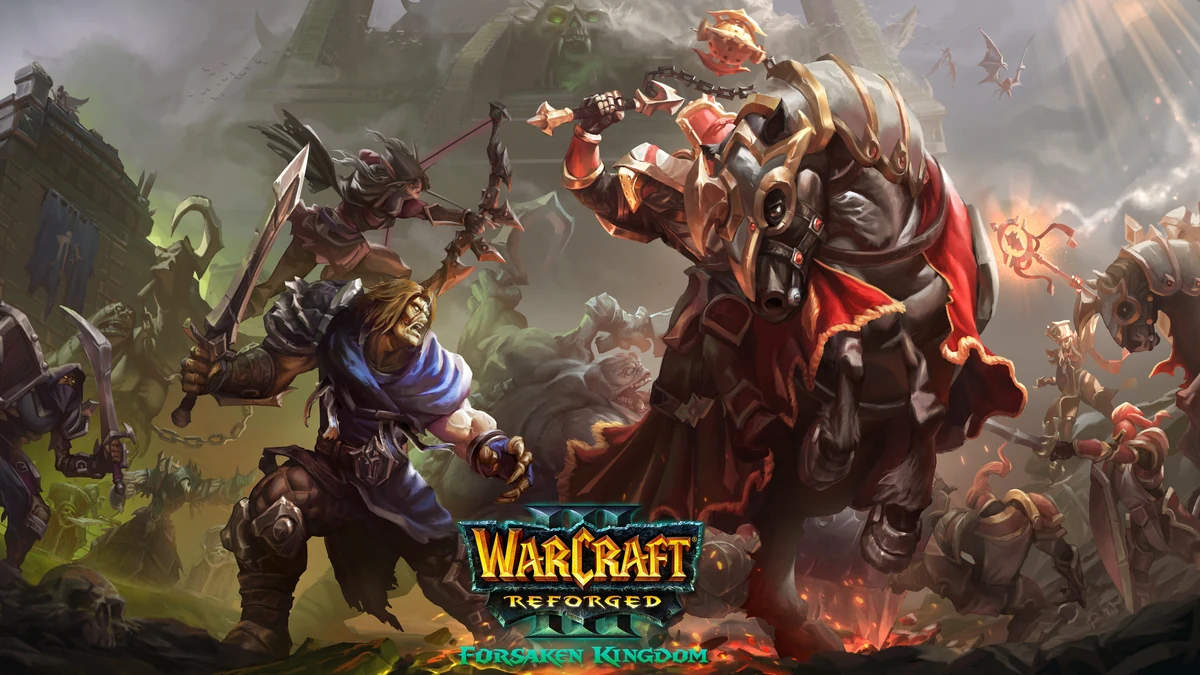
Forsaken Kingdom links Warcraft III directly to WoW Forever
Forever does not begin in isolation: Forsaken Kingdom establishes part of its history.
Warcraft III Reforged: Forsaken Kingdom is available now, adding the first new Warcraft III story campaign in more than two decades.
The expansion explores the period between Arthas’ return to Lordaeron and the rise of the Undercity, filling part of the four-year gap between Warcraft III and World of Warcraft. Blizzard says the full package contains roughly 30 hours of gameplay and nearly an hour of in-game cinematics.
A four-mission Last Days of Lordaeron prologue revisits the kingdom’s collapse from another perspective. The larger campaign follows the rise of Sylvanas and the Forsaken and adopts a softer, more open-ended RPG structure inspired by the Rexxar campaign from The Frozen Throne.
Patch 3.0 also gives Warcraft III a substantial technical and visual update. Its Definitive Edition presentation rebuilds more than 600 units and refreshes environments, effects, structures and lighting while leaving the older visual options available.
Multiplayer receives the Forsaken Paladin as well, the first new Warcraft III Tavern hero in more than 20 years.
Any one of those features would make Forsaken Kingdom notable for a game of Warcraft III’s age. Its role in Blizzard’s wider plan makes it more important.
Blizzard has explicitly connected story threads from Forsaken Kingdom to World of Warcraft: Forever. The company is using new material created for a 2002-era RTS to establish the history of a new MMO branch launching in 2026.
Modern WoW still moves toward The Last Titan
Forever does not replace modern World of Warcraft.
Blizzard also used BlizzCon to show more of the path through Midnight and toward The Last Titan, the concluding chapter of the Worldsoul Saga.
The next major Midnight update continues Xal’atath’s push toward Azeroth’s Worldsoul, while Blizzard has begun setting expectations for the story that follows. More information on The Last Titan is planned later rather than being folded into Forever’s separate branch.
Warcraft is now operating across three distinct relationships with its own history.
Modern WoW continues the current timeline. WoW Classic preserves and revisits earlier versions of the game. Forever starts from the foundations of original Azeroth and builds another future from them.
Warcraft III now sits underneath that structure as active narrative material again rather than only as the historical prequel to World of Warcraft.
Blizzard puts its roadmap on one timeline
The announcements stretch from content available now to StarCraft in Spring 2030.
| Date or window | Confirmed BlizzCon 2026 announcement |
|---|---|
| Available now | Warcraft III Reforged: Forsaken Kingdom and Patch 3.0 |
| 14 September 2026 | Xal’atath enters the Heroes of the Storm PTR |
| 15 September | Diablo IV: Season of Hell’s Legacy and Nintendo Switch 2 release |
| 17 September | WoW Forever beta begins for eligible pre-purchase players |
| 22 September | Hearthstone Battlegrounds adds Aberrations |
| 28 September | Xal’atath launches in Heroes of the Storm |
| 20 October | Hearthstone: Reign of the Black Empire |
| 4 November | World of Warcraft: Forever launches |
| March 2027 | Monk joins Hearthstone |
| First half of 2027 | Amazon class comes to Diablo IV |
| Spring 2029 | Diablo V |
| Spring 2030 | STARCRAFT |
Several of those dated releases, betas and major updates can also be followed through GameTechReport’s game release calendar.
Blizzard announced content that players can access immediately alongside projects whose public targets sit near the end of the decade.
Blizzard is not waiting for Diablo IV to finish before talking about Diablo V, or for its current Warcraft plans to run their course before establishing another version of Azeroth. Multiple generations of the same franchises are being developed in parallel.
Other major BlizzCon 2026 announcements
Diablo, StarCraft and Warcraft carried the largest reveals, but Blizzard also used the show to move its other live games forward.
Overwatch introduces Doctrine and moves Sombra to Support
Overwatch revealed Doctrine, a vampire-inspired Support hero aligned with Doomfist. Blizzard is also moving Sombra from Damage to Support, reworking Roadhog and adding the Watchpoint: Grímsvötn Escort map.
Hearthstone adds Monk and returns to the Old Gods
Reign of the Black Empire launches on 20 October, Battlegrounds adds Aberrations on 22 September, and Monk arrives in March 2027 as Hearthstone’s first new playable class in six years. Blizzard also revealed a 2v2 Tavern Brawl format.
Heroes of the Storm has new playable content again
Xal’atath reaches the Heroes of the Storm PTR on 14 September and launches on 28 September. A new hero is meaningful after years of limited development, but Blizzard has not announced enough to describe this as a full revival.
Blizzard is running old and new versions of its worlds at the same time
The largest BlizzCon reveals are easy to rank by spectacle. Diablo V and StarCraft are new major games. WoW Forever can be played much sooner. A new Warcraft III campaign is remarkable largely because most players would have considered that chapter of Blizzard’s catalogue finished years ago.
Blizzard is no longer treating its franchises as simple replacement cycles.
Diablo IV remains active while Diablo V is built. Warcraft III gains new canonical material that leads into another version of World of Warcraft while modern WoW moves toward The Last Titan. Original Azeroth becomes the foundation of a new development branch instead of remaining only a preserved snapshot. StarCraft returns without being required to reproduce StarCraft II’s genre.
Even Heroes of the Storm can receive a new character without Blizzard first promising an enormous reboot.
Nostalgia clearly helps make this possible. Blizzard owns worlds that players have followed for decades, and BlizzCon leaned heavily into that history: old Diablo classes, Warcraft III, original Azeroth and a StarCraft universe that has spent years outside the centre of Blizzard’s release calendar.
But the company is not only restoring old material. It repeatedly used familiar worlds to justify structural changes.
Diablo V begins after the defining villain has already won. StarCraft becomes an open-world shooter. Forever keeps the geography and leveling philosophy of early WoW while creating zones, quests and raids that never existed in the original game. Forsaken Kingdom gives a decades-old RTS new story material specifically because Blizzard wants that history to lead somewhere new.
Announcing games this early creates obvious risks.
A 2030 StarCraft announcement gives expectations years to grow before players can judge the game. Diablo V will be compared simultaneously with Diablo IV and the older entries whose systems Blizzard is revisiting. WoW Forever has to prove that new content can preserve the pacing and social structure Blizzard says it wants without eventually becoming modern WoW wearing Classic geography.
None of those questions can be answered from announcement trailers.
The roadmap begins with content available now, moves through major launches and betas this autumn, continues into 2027, reaches Diablo V in Spring 2029 and ends — for now — with StarCraft in Spring 2030.
For the first time in years, almost every major corner of Blizzard’s history appears to be moving at once.
BlizzCon continues on 13 September, and GameTechReport will update this report if the remaining panels materially change the roadmap described above.
Source: Blizzard Entertainment — BlizzCon 2026 Opening Ceremony recap and the official panel coverage linked from it. GameTechReport did not attend BlizzCon 2026 and has not performed hands-on testing of the unreleased projects discussed here.