
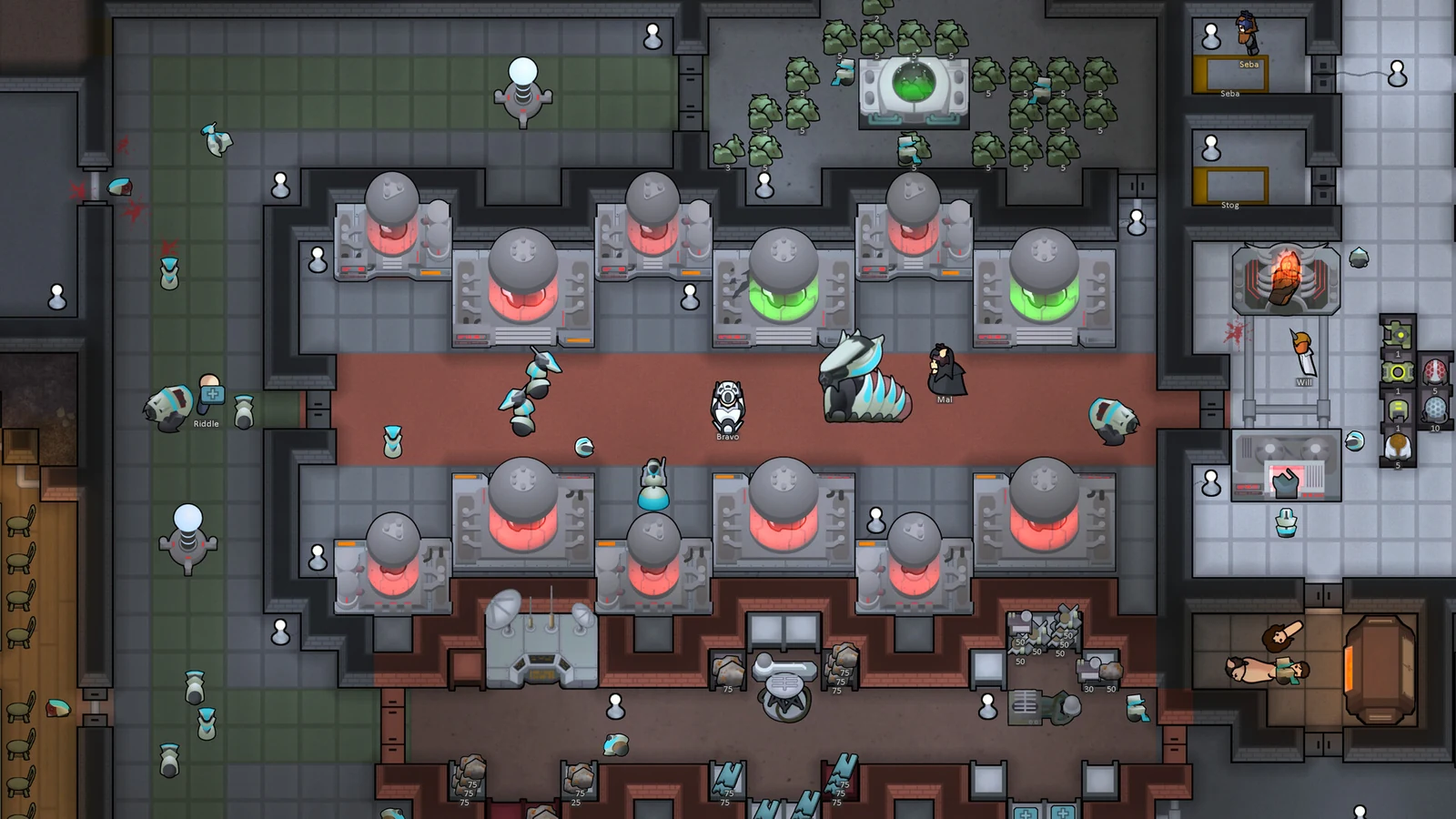
RimWorld is moving from Unity to Waylith, an in-house engine developed by Ludeon Studios. The studio says update 1.7 runs two to four times faster in its tests, with improvements aimed at large colonies and heavily modded installations. Players can already try it through Steam’s unstable beta branch; the stable game remains on version 1.6.
The challenge is compatibility: RimWorld has years of saved colonies and community mods built around Unity. Ludeon says those should largely carry over despite the engine replacement.
Ludeon’s tests show faster simulation and loading
In a stress test using a late-game colony, Ludeon measured 2.2 times the performance of version 1.6. Another test cut the loading time of a 1,500-mod setup from 14 minutes to six. The studio also reports faster startup, map and world generation, and higher ticks per second during play.
RimWorld’s ticks-per-second (TPS) figure measures the pace of the colony simulation, not how many frames the GPU draws. Large settlements can slow down as the game processes colonists, animals and other activity, even when graphics rendering remains smooth. An improvement in TPS therefore does not necessarily mean an equivalent increase in FPS.
These are developer measurements, not independent benchmarks. Ludeon has not published a comparable breakdown across CPUs, mod lists and colony sizes, so the 2–4x range should not be treated as a guaranteed gain on every installation.
Waylith keeps saves and most Unity-era mods working
Ludeon says existing version 1.6 saves can be opened in 1.7, and saves made in 1.7 can be loaded back into 1.6. It also expects the vast majority of mods to work without changes. A yellow “potentially unsupported” label may simply mean a mod author has not yet marked the mod as compatible with the new version.
Unlike Valheim’s 1.0 Unity engine upgrade, RimWorld replaces its engine entirely. The community-maintained 1.7 modding guide describes a compatibility shim that translates Unity calls for Waylith. This allows many existing compiled mods to continue working without an immediate rebuild.
The guide flags an exception: mods relying on the Prepatcher framework may need an updated dependency. Players should still check their own mod lists, particularly while 1.7 remains in unstable beta.
Mod authors gain new tools but also face new dependencies
Ludeon says Waylith opens up newer C# language features, makes complex mods less expensive to run and allows more ambitious visual effects. More than two dozen modders helped test the transition before the announcement.
For authors rebuilding code-based mods, the community migration guide describes a move to .NET 10 and new references including Waylith.dll and UnityStubs.dll. It also documents Harmony 3.0 requirements for method-patching mods. Existing mods may run through the compatibility layer, but code that directly targets Waylith requires changes to build projects and dependencies. The guide recommends native Waylith calls where developers want to avoid the overhead of compatibility stubs.
For visual mods, the guide documents GLSL shaders and Vulkan-based loading, while older Unity asset-bundle shaders are expected to remain usable. It also describes a Frame Profiler and a command-line option for loading selected mods, giving authors ways to isolate performance and compatibility issues during the beta.
RimWorld 1.7 is still in beta
To test Waylith, players can open RimWorld’s Steam Properties, select Betas and choose the unstable branch. Ludeon has not announced a stable 1.7 release date. It also cautions that PCs more than ten years old may have difficulty running the new engine.
Ludeon also confirmed that another game is being developed with Waylith. The studio has not announced its name or release window.
Sources: Ludeon Studios — Waylith Engine and Update 1.7 announcement, 12 October 2026; RimWorld Wiki — community-maintained 1.7 modding migration guide.