
AWS plans to deploy 2 million additional Nvidia GPUs across its global infrastructure in 2027 and 2028, expanding a capacity plan that already called for more than 1 million Nvidia GPUs starting in 2026. The new deployment will span Blackwell Ultra, Rubin and Rubin Ultra, but the broader announcement goes further than raw GPU volume: AWS is also bringing Nvidia Vera CPUs, Spectrum networking and NVLink Fusion deeper into its infrastructure while Amazon’s Annapurna Labs works with Nvidia on a new high-bandwidth memory design called NVHBM.
AWS is still investing in its own Trainium accelerators. NVLink Fusion and NVHBM instead give those custom chips a route into Nvidia’s rack-scale architecture alongside Nvidia GPUs, allowing AWS to expand both sides of its AI hardware strategy.
AWS Is Adding 2 Million GPUs After Its Earlier 1 Million-GPU Plan
AWS says the 2 million GPUs are additional capacity planned for 2027–2028. The company previously announced at GTC 2026 that it intended to add more than 1 million Nvidia GPUs beginning in 2026, and it now says demand has exceeded those expectations.
The newer deployment is set to include Nvidia Blackwell Ultra, Rubin and Rubin Ultra GPUs across AWS Global Infrastructure and AI factories. AWS is also expanding Blackwell capacity with RTX PRO 4500 Blackwell Server Edition GPUs for EC2 G7 instances. According to AWS, those G7 instances deliver up to 4.6 times the AI inference performance and up to 2.1 times the graphics performance of the previous G6 generation.
AWS and Nvidia are also working on Spectrum networking for larger training clusters, while Nvidia Vera CPU-based infrastructure is planned as another option for agentic AI workloads. On August 27, Nvidia said AWS had received its first Vera CPU server and Vera Rubin GPU, hand-delivered in Seattle. The handoff is a concrete step toward the planned Vera infrastructure, which AWS and Nvidia still describe as something they are working to bring to AWS.
The two companies are therefore extending the partnership beyond accelerators into CPUs, networking and rack-level design.
NVHBM Moves Part of the Memory System Into the HBM Stack
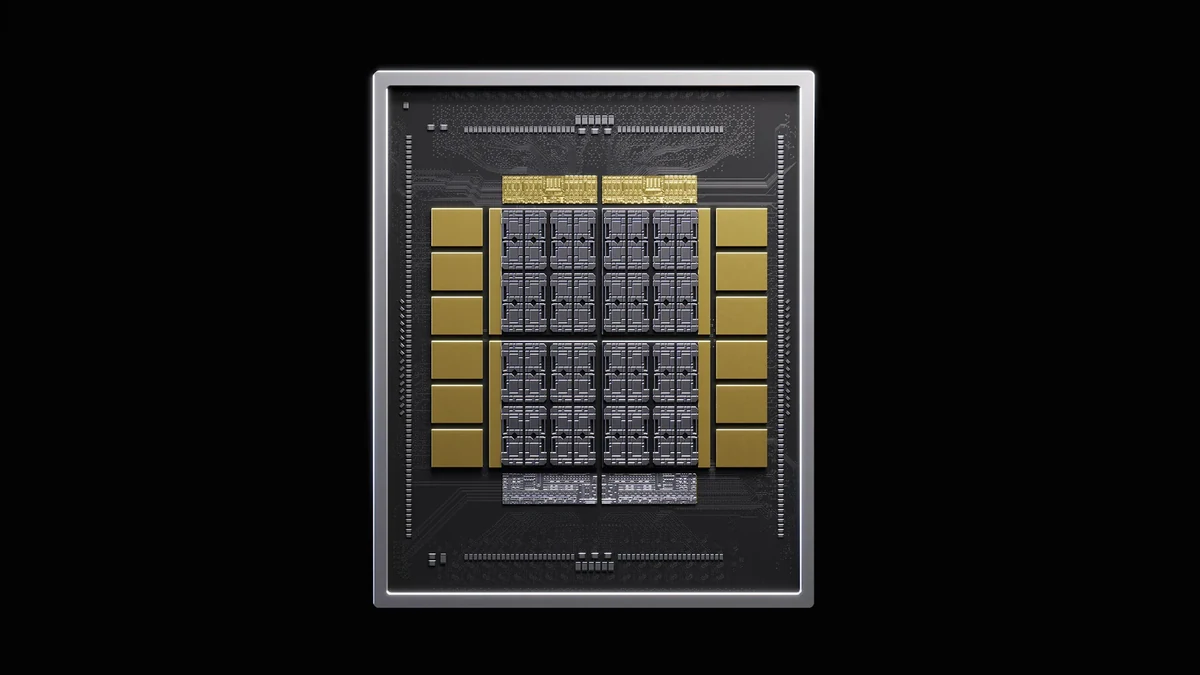
NVHBM changes how custom AI accelerators connect to high-bandwidth memory. Nvidia says the design places a custom base die and PHY inside the HBM stack and moves the memory controller away from the XPU compute die.
The goal is to free silicon area on the accelerator while increasing usable memory bandwidth. Nvidia claims NVHBM can provide up to 30% more memory bandwidth per stack than standard HBM4e, reduce HBM power use by up to 15% and free up to 25% more compute-die area. Nvidia estimates that combining those gains can increase end-to-end XPU performance by up to 30%.
Those figures are Nvidia’s platform claims rather than independent benchmark results, so they should be read as design targets for NVHBM-based systems. They also do not mean that the 2 million Nvidia GPUs AWS plans to deploy will themselves use NVHBM. The technologies are part of the same expanded partnership, but NVHBM is aimed at custom XPUs participating in the NVLink Fusion ecosystem.
Amazon’s Annapurna Labs Will Be the First NVHBM Collaborator
Amazon’s Annapurna Labs is the first announced collaborator for NVHBM. Nvidia says AWS will support NVLink Fusion in next-generation Trainium chips starting with Trainium4. The NVHBM work is a separate extension of that collaboration for future AWS infrastructure designs, so the announcement does not say Trainium4 itself will use NVHBM.
Trainium remains AWS custom silicon, but NVLink Fusion is intended to let custom XPUs and Nvidia GPUs share a common scale-up architecture. NVHBM extends that arrangement into the memory interface, giving Annapurna Labs access to Nvidia’s custom HBM technology while AWS continues designing its own accelerators.
AWS is therefore building capacity with both Nvidia GPUs and Trainium rather than choosing one accelerator strategy. NVLink Fusion, NVHBM, Vera CPUs and Spectrum networking also push the partnership beyond individual chips and into the surrounding rack-scale infrastructure.
The Expansion Also Reaches Government AI and Robotics
AWS and Nvidia say they also plan AI factories for the U.S. government, including 100,000 GPUs on secure AWS infrastructure for federal and national-security workloads classified at Impact Level 6 (IL6) and above. The wider collaboration covers Nvidia Nemotron models in Amazon Bedrock and SageMaker, GPU-accelerated data processing in EMR and OpenSearch, and Nvidia’s physical AI platform for Amazon Robotics.
The 2 million-GPU plan expands AWS capacity, while NVHBM and NVLink Fusion show where the partnership is heading next. AWS is continuing to develop Trainium as its own accelerator while adopting more Nvidia technology around memory, networking and rack-scale interconnects. The two companies are increasingly working on the system around the processor, not only the processor itself.
The same AI infrastructure buildout is also affecting memory prices for PC builders.
Sources: AWS; NVIDIA Technical Blog; NVIDIA Vera Blog.