
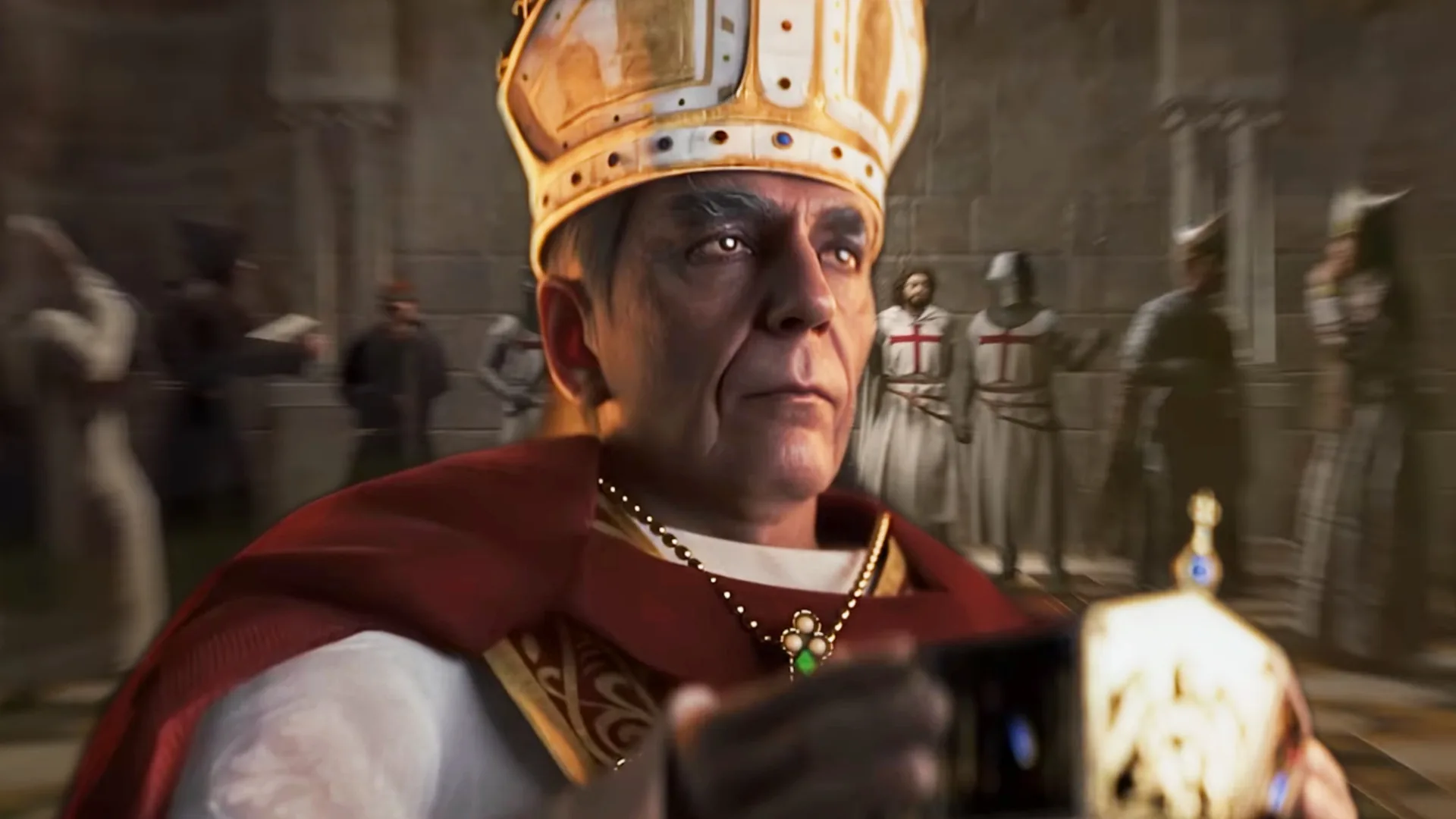
Crusader Kings 3: By God Alone launches on September 30, bringing playable theocracies and a much larger political role for religion to Paradox’s grand strategy game. It is a Core Expansion rather than a smaller event or cosmetic pack, and its systems are designed to affect both clerical rulers and the secular dynasties trying to control them.
The expansion turns several parts of medieval Christianity into active campaign mechanics. Players can influence cardinals, participate in ecumenical councils, contend with heresies and watch the relationship between Catholicism and Orthodoxy develop toward a possible Great Schism. Personal faith also gains more weight through a Spiritual Fulfillment system that connects traits, behavior and religious tenets.
Playable theocracies change who can rule
By God Alone opens landed theocratic realms to the player, including territories led by archbishops and the Papacy itself. Crusader Kings 3 normally builds long campaigns around hereditary dynasties, so playing a clerical ruler changes the basic problem of succession. A theocracy needs ways to manage power, wealth and continuity without relying on a family line.
Paradox says the Papacy receives its own resources of power and wealth. The new College of Cardinals creates another route for influence: popes appoint cardinals across Christendom, while secular rulers can try to shape those appointments and the direction of the Church. Archdioceses add religious jurisdictions that do not simply follow the borders of secular titles. These systems also matter in a conventional feudal campaign. A king may not control the Church directly, but cardinals, archbishops and clerical puppets become another political network to cultivate alongside vassals, marriages and claims.
The Christian Situation can lead to councils, heresy and schism
A persistent Christian Situation tracks the development of the faith and gives rulers actions tied to church politics. Ecumenical councils can decide questions of doctrine, while rites that move too far from accepted belief may be declared heretical. A ruler then has to conform, resist or live with the political consequences.
Paradox has since detailed how that system develops. The Christian Church Situation is split across seven Chapters, with Catalysts moving Christendom from one state to another. The August 25 developer diary focuses on the Investiture Controversy, where Christian faiths begin with a new Conditional clerical appointment doctrine. Secular rulers and clergy can make appointments inside their own jurisdictions without first asking the other side for permission, but interference in those appointments can push the wider Church toward open conflict. Once the Investiture Controversy begins, a 30-year countdown leads to an Investiture Council that decides whether Spiritual, Revocable or Temporal, Revocable appointment rules prevail.
Campaigns beginning in 867 can also move toward the Great Schism between Western Catholicism and Eastern Orthodoxy. Paradox presents this as a crossroads rather than a static historical label, which gives player decisions and the wider simulation room to affect how the separation unfolds.
Dynamic Holy Sites reinforce that idea. Faiths can change their sacred geography as they develop, while cathedrals associated with revered saints or other figures can become new Holy Sites. Monastic Holy Orders provide research and theological benefits to rulers who host their headquarters.
Faith becomes a personal system as well as a political one
The Spiritual Fulfillment system connects character traits, actions and tenets to a ruler’s inner religious life. Sin and virtue therefore reach beyond stress or opinion modifiers: they can shape a character’s relationship with God and fear of the afterlife.
Paradox is also revising religious tenets around the relationship between a character and their faith. A ruler may follow beliefs outside the accepted boundary or use internal church politics to have personal preferences recognized. Religious change can therefore grow out of a ruler’s behavior and position inside the Church instead of sitting only behind a one-time reform screen.
By God Alone is part of Crusader Kings 3 Chapter V
By God Alone is included in the Crusader Kings 3: Chapter V expansion pass alongside a Major Expansion, a music pack and a cosmetic clothing pack. Paradox currently lists the Core Expansion for September 30 on PC, with the Steam page available for wishlisting.
The date also belongs in GTR’s 2026 game release calendar. Paradox’s later developer diaries have now put firmer rules behind parts of the original reveal, including the seven-Chapter Christian Situation and the Investiture Controversy. They reinforce the expansion’s original direction rather than replacing it: By God Alone remains a structural religion expansion built around church authority, doctrine and the rulers who have to navigate both.
Sources: Paradox Interactive — Crusader Kings III: By God Alone; Paradox developer diaries — Christian Church Situation and Investiture Controversy.