
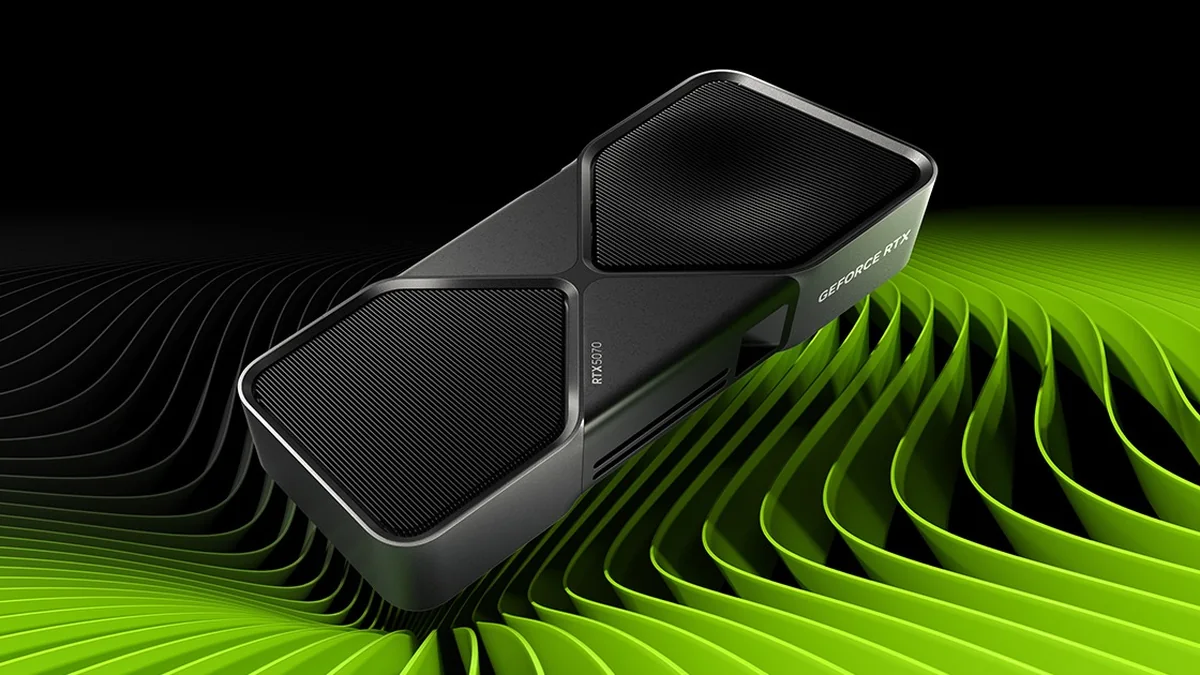
US retail prices for Nvidia’s GeForce RTX 50-series have moved sharply higher, with the RTX 5070 and RTX 5060 Ti 16GB among the hardest-hit mainstream models. The latest data is particularly striking when current retail pricing is compared not only with June, but with Nvidia’s original launch prices.
There is an important distinction from the start: these are retail-market prices. Nvidia has not announced that the RTX 5070 now has a $755 or $900 official MSRP. PC Gamer tracks the lowest prices it can find, while Tom’s Hardware calculates median prices across Newegg listings. Those are two different measurements of the same increasingly expensive US market.
How much have RTX 50-series prices risen?
Tom’s Hardware compared median Newegg listings from June and August 2026. Adding Nvidia’s original starting prices shows how far the market has moved beyond the price tiers these cards launched in.
Price snapshot: Data checked August 14, 2026. The June and August figures below are median US Newegg listings reported by Tom's Hardware. They are a retailer-specific market sample, not a complete average of every US store.
| GPU | Launch MSRP | June median | August median | June-Aug. | Aug. vs MSRP |
|---|---|---|---|---|---|
| RTX 5050 | $249 | $299.99 | $314.99 | +5% | +27% |
| RTX 5060 | $299 | $369.99 | $469.99 | +27% | +57% |
| RTX 5060 Ti 8GB | $379 | $469.99 | $529.99 | +13% | +40% |
| RTX 5060 Ti 16GB | $429 | $569.99 | $804.99 | +39% | +88% |
| RTX 5070 | $549 | $659.99 | $899.99 | +36% | +64% |
| RTX 5070 Ti | $749 | $1,099.99 | $1,099.99 | Flat | +47% |
| RTX 5080 | $999 | $1,461.99 | $1,499.99 | +3% | +50% |
| RTX 5090 | $1,999 | $4,299.99 | $4,699.99 | +9% | +135% |
The June and August figures are Tom’s Hardware’s median Newegg listings. The final column is a GameTechReport calculation comparing the August median with Nvidia’s original starting price, rounded to the nearest whole percentage.
That comparison matters because a modest month-to-month increase can hide an already expensive baseline. The RTX 5090, for example, rose only 9% between the two samples but its August median was still more than twice its original $1,999 starting price.
The RTX 5070 has moved far beyond its original price tier
Nvidia launched the RTX 5070 with a starting price of $549. Tom’s Hardware measured an August median of $899.99, roughly 64% above that launch figure.
PC Gamer’s lowest-price tracker gives a different but equally useful view of the market. On August 14 it listed the cheapest RTX 5070 it could find at about $755, after the card had been available near $550 only a short time earlier.
The difference between $755 and $899.99 does not mean the sources disagree. One is the cheapest currently available entry point PC Gamer found; the other is the midpoint across Tom’s Hardware’s wider Newegg listing sample.
The 16GB RTX 5060 Ti is even further from launch MSRP
The RTX 5060 Ti 16GB launched at $429. Tom’s Hardware’s August median was $804.99, around 88% above that starting price.
PC Gamer’s August 14 lowest-price snapshot put the 16GB model at around $650. Its 8GB RTX 5060 Ti listing was roughly $420, illustrating how unusually expensive the additional VRAM has become in the current market.
That does not mean 8GB is automatically the better technical choice. Higher-resolution textures, content-creation workloads and local AI applications can benefit from more VRAM. The problem is the current price premium attached to some higher-capacity cards.
The RTX 5060 shows how much the entry-level ladder has shifted
Nvidia introduced the RTX 5060 at $299. Tom’s Hardware’s August median of $469.99 is around 57% above that launch price and even higher than the RTX 5060 Ti 16GB’s original $429 starting price.
This is one of the clearest ways to see how the current market has distorted Nvidia’s original product ladder. A model designed to start at $299 is now sitting, at the median, above the launch price of what was supposed to be a substantially higher tier.
Not every RTX 50-series card moved equally in August
The latest increase is not uniform. Tom’s Hardware saw the RTX 5070 Ti median remain at $1,099.99 between June and August, while the RTX 5080 moved only 3% and the RTX 5090 rose 9%.
That does not make those GPUs inexpensive. All three were already well above their launch prices before August. The sharpest new movement in this particular dataset is concentrated around the RTX 5060, RTX 5060 Ti and RTX 5070.
AMD has not seen the same August jump — yet
Tom’s Hardware reported only single-digit percentage increases across the RDNA 4 cards in the same survey. PC Gamer’s August 14 tracker listed the Radeon RX 9070 at around $650 and the RX 9070 GRE at around $500.
Those figures are worth checking when comparing current purchases. In PC Gamer’s same-day snapshot, the RX 9070 was priced at roughly the same level as the cheapest RTX 5060 Ti 16GB and about $105 below the cheapest RTX 5070.
That is a price comparison, not a claim that the cards are interchangeable for every workload. Features, ray tracing, VRAM, power use and application support can all matter to an individual buyer.
What is pushing GPU prices higher?
There is no new Nvidia announcement saying that these US retailer prices represent a revised official MSRP schedule.
Industry reporting has instead focused on higher GPU-and-memory costs and broader pressure on silicon and VRAM supply. PC Gamer had already reported expectations of higher Nvidia card prices after increases in the cost of GPU bundles containing chips and memory, while Tom’s Hardware places the latest US movement in the context of a wider silicon and component squeeze.
AI infrastructure demand is part of that broader memory and semiconductor environment, but retail GPU pricing is also affected by inventory, individual board partners, distributors and retailers. It would therefore be too simplistic to attribute every dollar of the August increase to one cause.
What should PC builders do now?
The most useful approach is to compare the cards actually available today rather than shopping according to the product tiers Nvidia announced at launch.
An RTX 5070 near $550 and an RTX 5070 at $755-$900 are fundamentally different value propositions. The same applies to an RTX 5060 Ti 16GB that launched at $429 but now appears around $650 at the low end and above $800 at the median of one major US retailer’s listings.
Buyers who need a card immediately should compare multiple retailers and include Radeon alternatives in the same price bracket. Buyers who do not need to upgrade immediately may prefer to wait for inventory and pricing to change, although there is no guarantee that prices will quickly return to their original levels.
These figures describe the US market, not every region
The percentages in the main table come from US Newegg listings, while PC Gamer’s lowest-price figures cited above are also US prices.
Other regions can behave differently because of local stock, taxes, exchange rates and retailer competition. The US figures should therefore not be treated as a universal global RTX 50-series price increase.
Update, August 31: A broader TechSpot survey shows that August’s price increase extends well beyond the US market. Tracking the cheapest available current-generation cards across 10 countries, TechSpot measured a 15% average month-to-month increase. GeForce prices rose 19% on average, compared with 11% for Radeon. The RTX 5070 climbed 20%, the RTX 5080 15%, and the RX 9070 8%.
Those figures use a different method from the Newegg median pricing in the tables above: TechSpot records the cheapest verified in-stock model in each market. The datasets therefore measure different slices of retail pricing, but together they show that the August increase is broader than the US listings first examined here.
Nvidia RTX 50 prices: the short version
- RTX 5070: August median $899.99, up 36% from June and roughly 64% above its $549 launch price.
- RTX 5060 Ti 16GB: August median $804.99, up 39% from June and roughly 88% above its $429 launch price.
- RTX 5060: August median $469.99, up 27% from June and roughly 57% above its $299 launch price.
- RTX 5070 Ti: August median was flat versus June, but still around 47% above launch MSRP.
- RTX 5080: only a 3% June-to-August increase, but roughly 50% above launch MSRP at the median.
- Important: these are retail-market movements, not newly announced official Nvidia MSRPs.
- Market: the main dataset covers US Newegg listings.
- Buyer takeaway: compare current street prices and alternatives rather than assuming each GPU still occupies its original price tier.
Sources: NVIDIA; Tom’s Hardware; PC Gamer; TechSpot — Q3 2026 global GPU pricing survey.