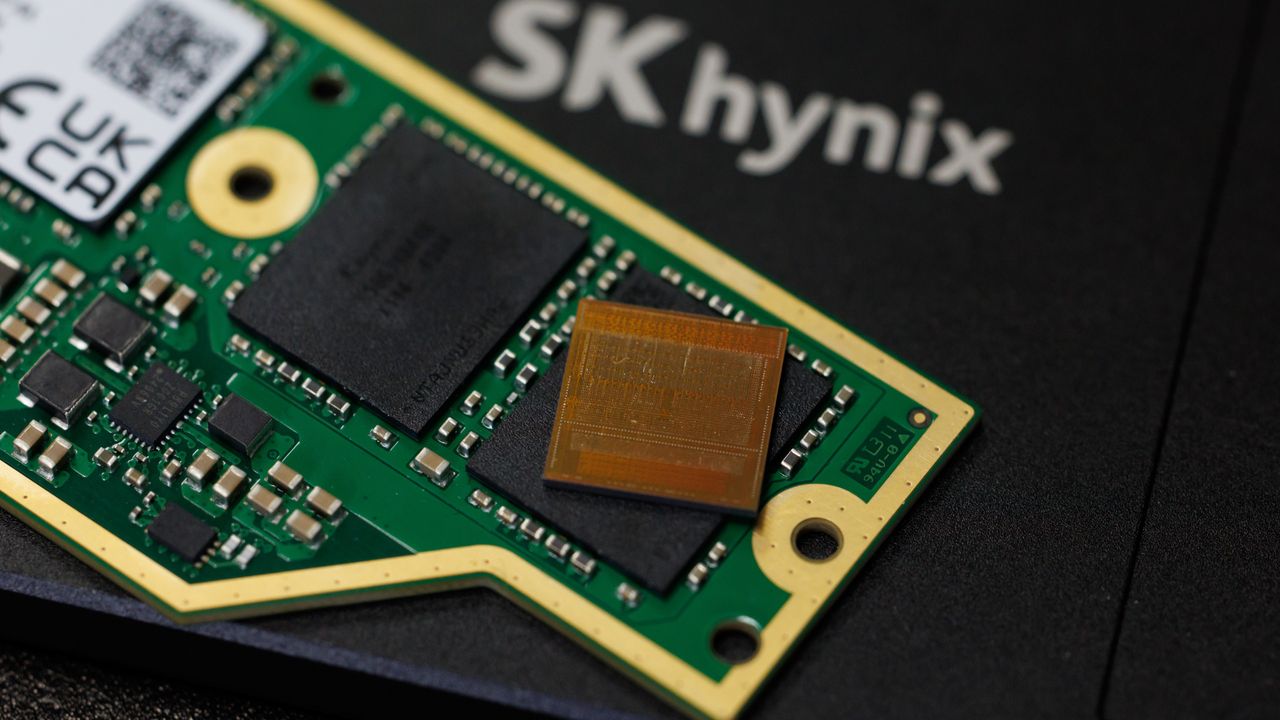
SK hynix has introduced iHBM, a new thermal management approach for high-bandwidth memory that aims to keep AI memory running cooler under heavy load. The company says the design places cooling elements directly into the HBM package, with an emphasis on the hottest part of the stack where heat can build up during intense data traffic.
Cooling at the source
HBM has become a key part of modern AI systems because it delivers very high bandwidth by stacking memory dies vertically and placing them close to the processor. That layout helps performance, but it also creates a difficult thermal environment, especially when the memory sits alongside a GPU or AI accelerator in a tightly packed package.
SK hynix says iHBM addresses that problem by embedding non-conductive, silicon-based Integrated Cooling Elements, or ICEs, directly into the Die-to-Die Physical Layer. That interface connects the HBM base die to the AI processor and is especially prone to heat spikes when data traffic is heavy.
What SK hynix says the design changes
Rather than relying only on indirect heat removal through the broader package, iHBM creates a more direct path for heat dissipation at the point where it is most concentrated. The company says that approach reduces thermal resistance by more than 30%, which should help maintain stable operating characteristics in hot, demanding environments.
- ICEs are integrated directly into the HBM package
- The cooling focus is the D2D PHY region, where heat is most intense
- SK hynix claims more than 30% lower thermal resistance
- The goal is to reduce thermal throttling during heavy AI workloads
Why this matters for AI hardware
Thermal throttling is one of the main obstacles for dense AI systems. When temperatures rise too far, hardware lowers clocks and voltages to protect itself, which can cut into performance. In a market built around sustained throughput, that kind of slowdown can be a major limitation.
SK hynix says iHBM is intended to help next-generation memory stacks scale to higher heights while keeping data transfer speeds steady under sustained load. The company is targeting future products such as HBM5, with use cases that include HPC systems, AI data centers, and other high-density, high-bandwidth deployments.
Built for existing manufacturing flows
One part of the pitch is that iHBM can be manufactured using SK hynix’s existing wafer-level packaging process, based on its MR-MUF technology. The company also says the design is compatible with current System-in-Package configurations, which could make adoption easier for customers without requiring major platform changes.
For now, the announcement positions iHBM as a packaging and thermal strategy for the next wave of AI memory rather than a consumer-facing product. If SK hynix can deliver the claimed thermal gains at scale, the technology could help address one of the most persistent limits in high-performance AI hardware.
Source
Source: Tom’s Hardware