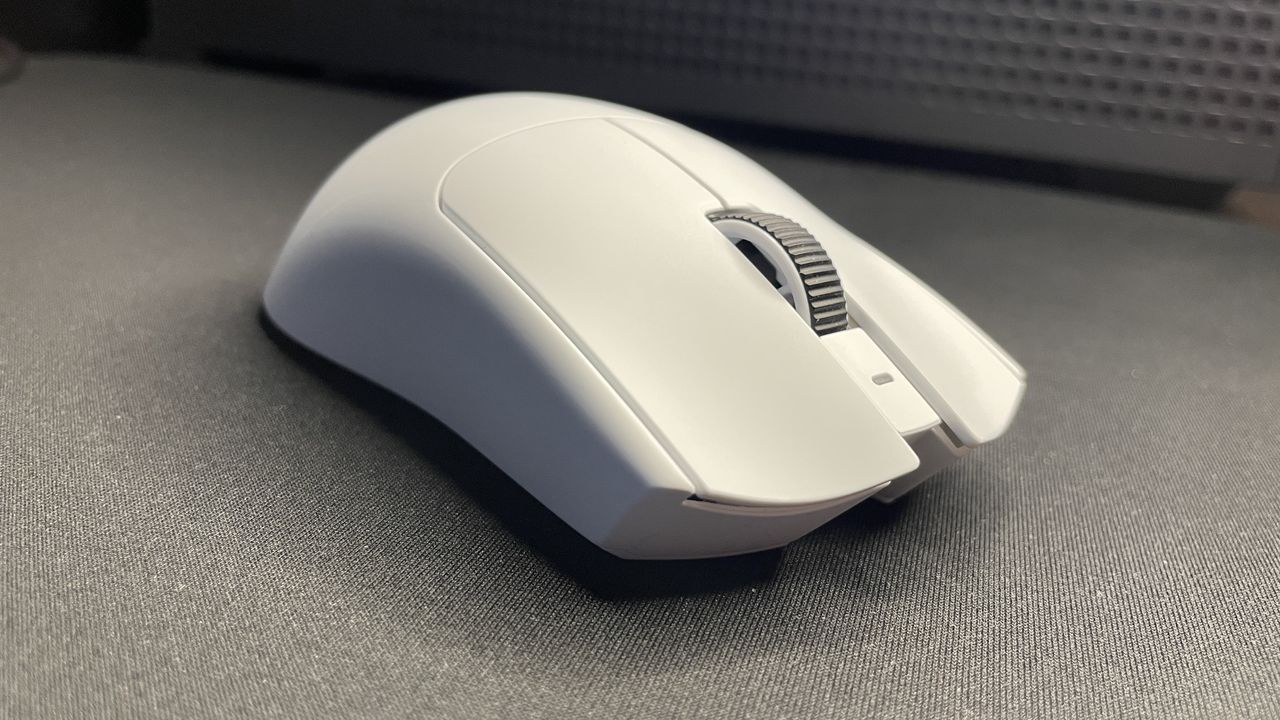
Razer’s new Viper V4 Pro is already earning attention as one of the company’s standout gaming mice, but a recent user report has highlighted an unexpected wrinkle for anyone planning to pair it with a glass mouse pad. A reviewer says the mouse ran into sensor problems on multiple glass surfaces, and the troubleshooting process turned into a warranty dispute after the original feet were replaced with third-party dot skates.
Glass pad testing raises two separate issues
The problem first surfaced when reviewer Spec0 tried using the Viper V4 Pro on glass pads with aftermarket skates installed. The mouse reportedly behaved poorly across several glass surfaces, which is awkward enough on its own for a product that sits at the top end of Razer’s gaming mouse lineup.
That frustration was then compounded by Razer’s initial response. The company reportedly pointed to the removed stock feet and treated the change as a warranty issue, even though replacing mouse skates is a common external modification that does not involve opening the mouse itself.
Why skates matter more on glass
Swapping to smaller dot skates is a normal move for people using glass mouse pads. Compared with larger PTFE feet, dots can reduce friction further, help keep the mouse from scraping across dust, and can even trim a little weight.
There is a catch, though: those same dot skates are usually less suitable for cloth pads because they can sink in too much. On glass, that drawback does not apply, which is why this kind of setup is so common among users chasing the lowest possible glide resistance.
- Dot skates are often chosen for lower friction on glass
- They can help reduce scraping from dust and debris
- They are generally less ideal on cloth mouse pads
- The Viper V4 Pro’s stock feet are not the focus here; the issue is the warranty interpretation
Razer says the case is being resolved
After a call with Razer, Spec0 says the matter has now been resolved and that the company will replace the unit. They also say Razer is working to clarify its warranty terms and investigate the sensor behaviour on glass pads.
There is still some uncertainty around how broad the sensor issue may be. A quick personal test on a glass pad reportedly showed no problem, which suggests the issue may not affect every setup. It is also possible Razer would have tested the mouse alongside its own Atlas Pro glass pad during development, though that does not rule out compatibility quirks in the field.
A small detail that may matter
One detail that stands out is the Viper V4 Pro’s lack of a clear access notch near the skates. On many mice, that small indentation makes it easier to lift the feet for replacement. Without it, the design may make users wonder whether Razer is less tolerant of skate swaps than other mouse makers.
That would be a shame, because replacing skates is usually one of the least invasive ways to tune a mouse for a specific surface. For now, the main question is whether Razer’s warranty language will be clarified enough to avoid treating a simple skate change as a violation.
Source
Source: PC Gamer Hardware