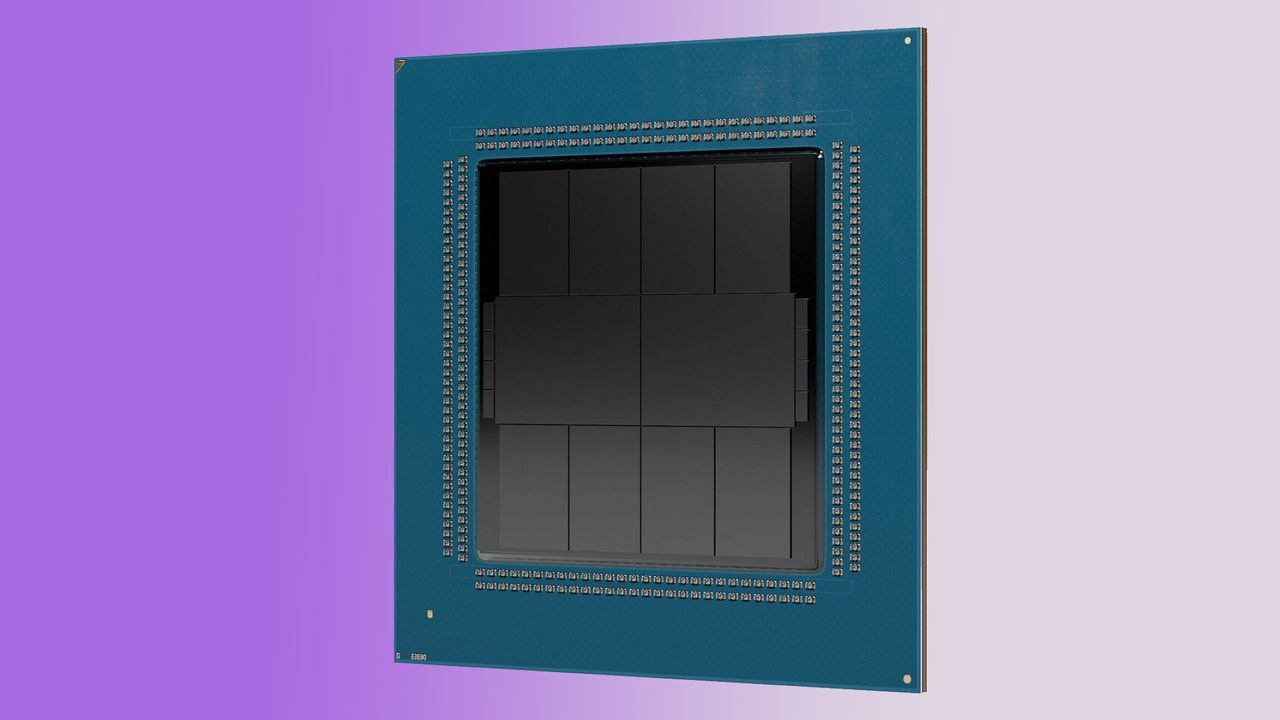
AMD’s first 2 nm CPUs are now in production, and Intel teases 10A and 7A chip roadmap plans for the years ahead in a way that suggests the race to smaller, denser silicon is still very much alive. The immediate headline is AMD’s move to TSMC’s N2 process for its next EPYC server chips, but the longer-term takeaway is that both major x86 players are still talking about new generations of manufacturing technology rather than standing still.
AMD’s first 2 nm chip is an EPYC server part
AMD says its next-generation EPYC processor, codenamed Venice, is ramping production in Taiwan on TSMC’s 2 nm process, with additional production planned at TSMC’s Arizona site. Venice is built on AMD’s Zen 6 architecture, which will also underpin the company’s next desktop family, Olympic Ridge.
That makes Venice more than a server launch in isolation. It is the first clear sign of where AMD’s next CPU generation is heading, even if the chip itself is aimed at data centers first.
- Process node: TSMC N2, or 2 nm
- Chip family: AMD EPYC “Venice”
- Architecture: Zen 6
- Future desktop tie-in: Olympic Ridge, with Ryzen 10000 Series branding still possible
Why the move to N2 matters
Most of AMD’s current CPUs, including Ryzen 9000, are based on TSMC silicon derived from the company’s N5 node. AMD has made only limited use of N3 so far, so jumping to N2 is a fairly aggressive step.
There are no commercially available chips on TSMC’s N2 process yet, which makes AMD’s production ramp notable. One likely advantage is that the node could allow 12 cores per CPU chiplet, up from eight today. In practical terms, that opens the door to higher-core-count gaming chips with 3D V-Cache, as well as larger 24-core dual-chiplet models for heavily threaded workloads.
Zen 6 is penciled in for 2026
AMD has said Zen 6 will launch in 2026, though the timing still appears to be later in the year. The company has not fully detailed which products will arrive first, and that leaves room for the EPYC rollout to lead the way before desktop parts follow.
For PC buyers, that means the most advanced Zen 6 silicon may show up in servers before it trickles down to mainstream desktop systems.
Intel’s long view gets longer
Intel is already shipping Panther Lake mobile processors on its 18A node and has been promoting 14A as the next step. What stands out now is that CEO Lip-Bu Tan has publicly mentioned even more distant process nodes for the first time.
Speaking at the J.P. Morgan annual tech conference, Tan said he is looking at a roadmap that includes 10A and 7A. That does not guarantee those nodes will become commercial products, but it does show Intel talking about manufacturing plans several steps beyond what it has already announced.
That’s a meaningful shift, especially after recent uncertainty around Intel’s future foundry plans. Tan also said 14A would not reach volume production until 2029, so any 10A or 7A discussion is clearly a long-range conversation rather than an imminent product reveal.
A useful sign for the next few years of PC hardware
None of this changes the market overnight, but it does show that both AMD and Intel are still pushing ahead with new process technology. AMD is already ramping a 2 nm CPU, while Intel is sketching out a roadmap that stretches beyond 14A.
For readers watching CPU performance, power efficiency and platform lifecycles, the message is simple: the next few generations of PC hardware are still likely to bring meaningful changes, even if Moore’s Law no longer moves at the pace it once did.
Source
Source: PC Gamer Hardware