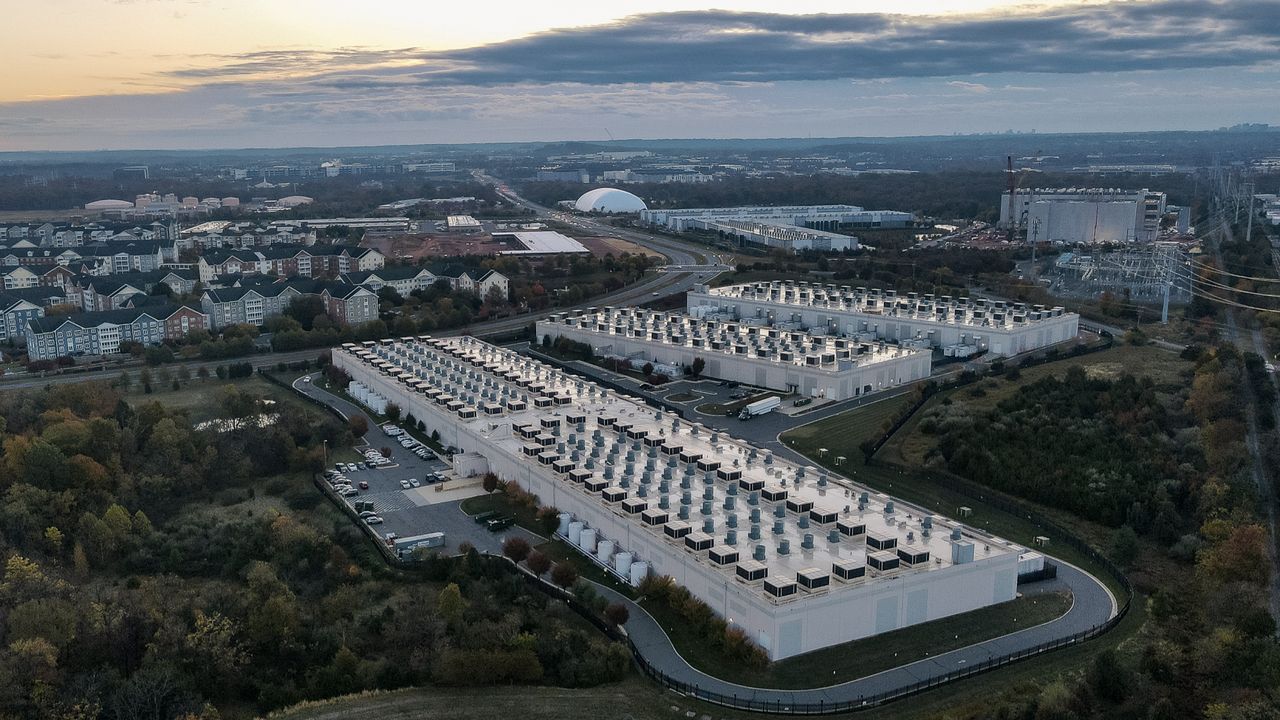
Amazon has rolled out a new data center networking design that it says delivers up to 33% higher throughput while cutting power use by 40%, and the Amazon AWS RNG network is now already the default for most AWS workloads. The system, called Resilient Network Graphs, replaces long-standing hierarchical layouts with a flatter approach based on random graph theory.
A flatter network for hyperscale data centers
For years, large cloud data centers have leaned on “fat-tree” style networking, where traffic moves up and down layers of switches and routers. That model is familiar and reliable, but it can also create congestion points and leave some bandwidth underused.
Amazon’s answer is RNG, a network architecture built to spread traffic across many possible routes instead of funneling it through a rigid hierarchy. The company says that shift improves efficiency and helps data move more quickly between servers.
What Amazon says RNG changes
AWS says the architecture uses 69% fewer networking devices than traditional designs and can reduce infrastructure costs by up to 45%. In practical terms, that means fewer switches and routers in the network fabric, along with lower power demand.
- Up to 33% higher throughput
- 40% lower network power consumption
- 69% fewer networking devices
- Up to 45% lower infrastructure costs
Those are significant claims, especially at AWS scale, where even small efficiency gains can translate into large savings across the cloud footprint.
How Amazon made the design workable
Random graph networking has been discussed in research for years, but turning it into a real hyperscale system has been difficult. Routing becomes more complex when traffic can take many paths, and the physical cabling challenge grows quickly at massive scale.
Amazon says it addressed those problems with two key pieces: a custom routing protocol called Spraypoint and a passive optical device named ShuffleBox. Spraypoint spreads traffic across available paths instead of relying mostly on the shortest route, while ShuffleBox helps organize the cabling needed to build the network at scale.
Already in use across AWS
Amazon says it first deployed RNG in a Dublin data center in 2024, then expanded it to facilities in Germany and Spain. The company says it has been quietly rolling the system out since last year, and that it is now the default network for most AWS workloads.
It is also being deployed in newly built data centers, with AWS planning to use it as the foundation for future builds. Amazon frames the change as part of a wider effort to improve the full infrastructure stack behind cloud and AI services, where networking is increasingly as important as compute, storage, and cooling.
Why this matters beyond AWS
As AI models and cloud applications grow, networking becomes a bigger part of the performance puzzle. Faster chips help, but the path data takes between servers can make just as much difference when workloads scale into the thousands or even hundreds of thousands of machines.
Amazon says RNG is meant to improve reliability and performance while also lowering hardware use and emissions. Whether other hyperscalers follow with similar designs remains to be seen, but AWS clearly sees this as more than a routine infrastructure update.
Source
Source: Tom’s Hardware